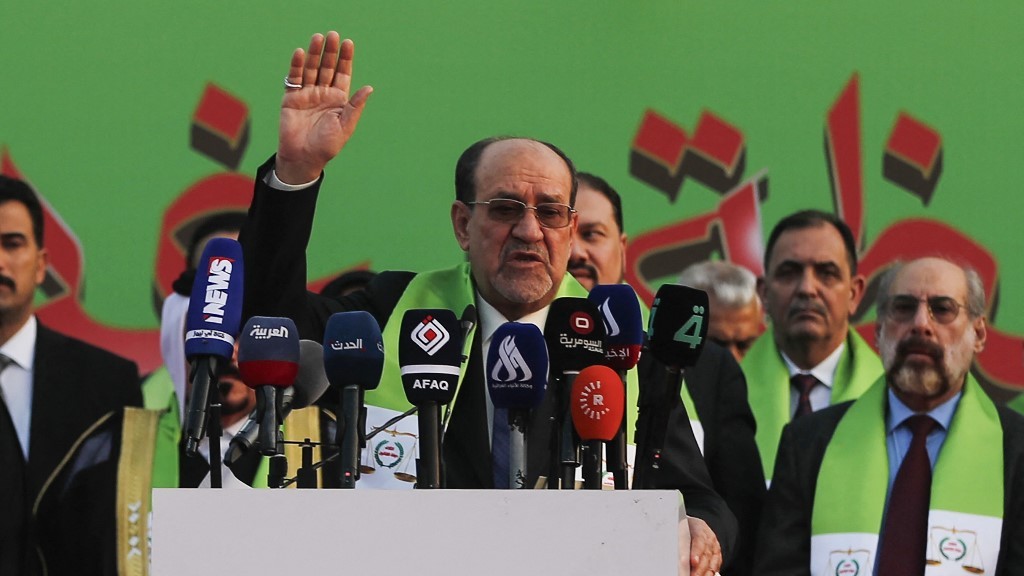
The political landscape in Iraq faces renewed uncertainty as Nouri al-Maliki emerges as a potential prime ministerial candidate, stirring concerns about regional stability and international relations. The Shiite Coalition Framework alliance selected Maliki—former prime minister from 2006 to 2014—after the incumbent Mohammed Shia al-Sudani failed to form a government following November’s elections. This development has triggered alarm in Washington and among Iraqi citizens who recall Maliki’s previous tenure, which culminated in the Islamic State group capturing vast territories and widespread accusations of sectarianism and corruption.
Donald Trump escalated tensions through a TruthSocial post, characterizing Maliki’s earlier rule as an era of ‘poverty and total chaos’ and threatening to withdraw U.S. support if Maliki returns to power. Maliki retaliated on social media platform X, condemning Trump’s remarks as a violation of Iraq’s democratic processes and advocating for diplomatic dialogue over threats.
Analysts and journalists highlight the high stakes of this political maneuvering. Muntazar al-Zaidi—the journalist internationally known for throwing his shoes at Maliki and George W. Bush in 2008—described Maliki’s previous rule as a ‘dark period’ marked by corruption, repression, and economic mismanagement. Reports indicate that approximately $500 billion vanished from state coffers during Maliki’s eight-year administration.
The U.S. administration has implied potential sanctions should a government backed by Iran-aligned paramilitaries take office, reflecting Washington’s view of Maliki as an Iranian ally. Internally, Maliki’s nomination has exposed divisions within Iraq’s political blocs. While the Sunni-led Taqadum party opposes his candidacy, citing risks of renewed sectarian conflict, the Azm Alliance has expressed support.
Experts note that Maliki’s path to power remains uncertain. Hayder al-Shakeri of Chatham House observed that although Maliki holds a numerical majority within the Shiite Coordination Framework, he lacks full consensus, complicating his ability to present himself as a unifying leader. The ongoing government-formation process—delayed as Kurdish parties select a presidential candidate—will ultimately determine whether Maliki can secure a third term amid domestic and international apprehensions.