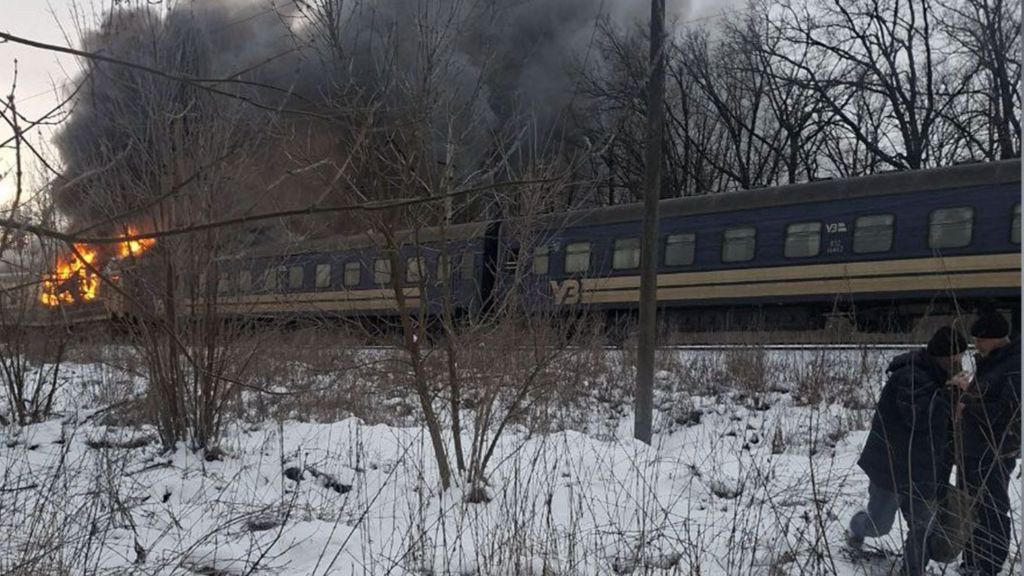
A Ukrainian military officer from the 93rd Brigade, identified by his call-sign Omar, has provided a harrowing firsthand account of the immediate rescue efforts following a Russian drone strike on a civilian passenger train in northeastern Ukraine. The attack, which President Zelensky condemned as an act of terrorism, resulted in five fatalities but could have claimed significantly more lives without Omar’s decisive intervention.
Omar, a drone unit commander who happened to be traveling on the Chop-to-Barvinkove route, described the sequence of events that began when the first of three Russian drones struck near the train, forcing an emergency halt. Moments later, another explosion rocked the carriage as a second drone found its mark. Recognizing the tactical pattern of a drone operator observing and adjusting strikes, Omar immediately instructed panicked passengers to evacuate before the targeted carriage erupted in flames.
The military officer’s trained response proved critical as 291 passengers faced the rapidly developing crisis. After ensuring the initial evacuation, Omar returned to the smoldering wreckage with other volunteers to search for survivors, discovering five casualties in the process. His most poignant encounter was with a terrified young mother clutching her infant, who revealed she was traveling to the front lines so her soldier husband could meet their child for the first time.
This attack represents an escalation in targeting Ukraine’s extensive railway network, a critical infrastructure system that has become a symbol of national resilience since the full-scale invasion began in February 2022. Despite previous attacks on rail infrastructure, Ukraine’s rail company Ukrzaliznytsia has maintained remarkable operational continuity across its 21,000-kilometer network, though increasing attacks and severe weather have caused growing delays.
In response to the attack, railway stations across Ukraine flew flags at half-mast, and the nation’s daily moment of silence was dedicated to the victims. Demonstrating the system’s resilience, service on the Barvinkove-Chop line resumed within hours of the attack, even as the incident highlighted the increasing vulnerability of civilian transportation networks in the conflict.