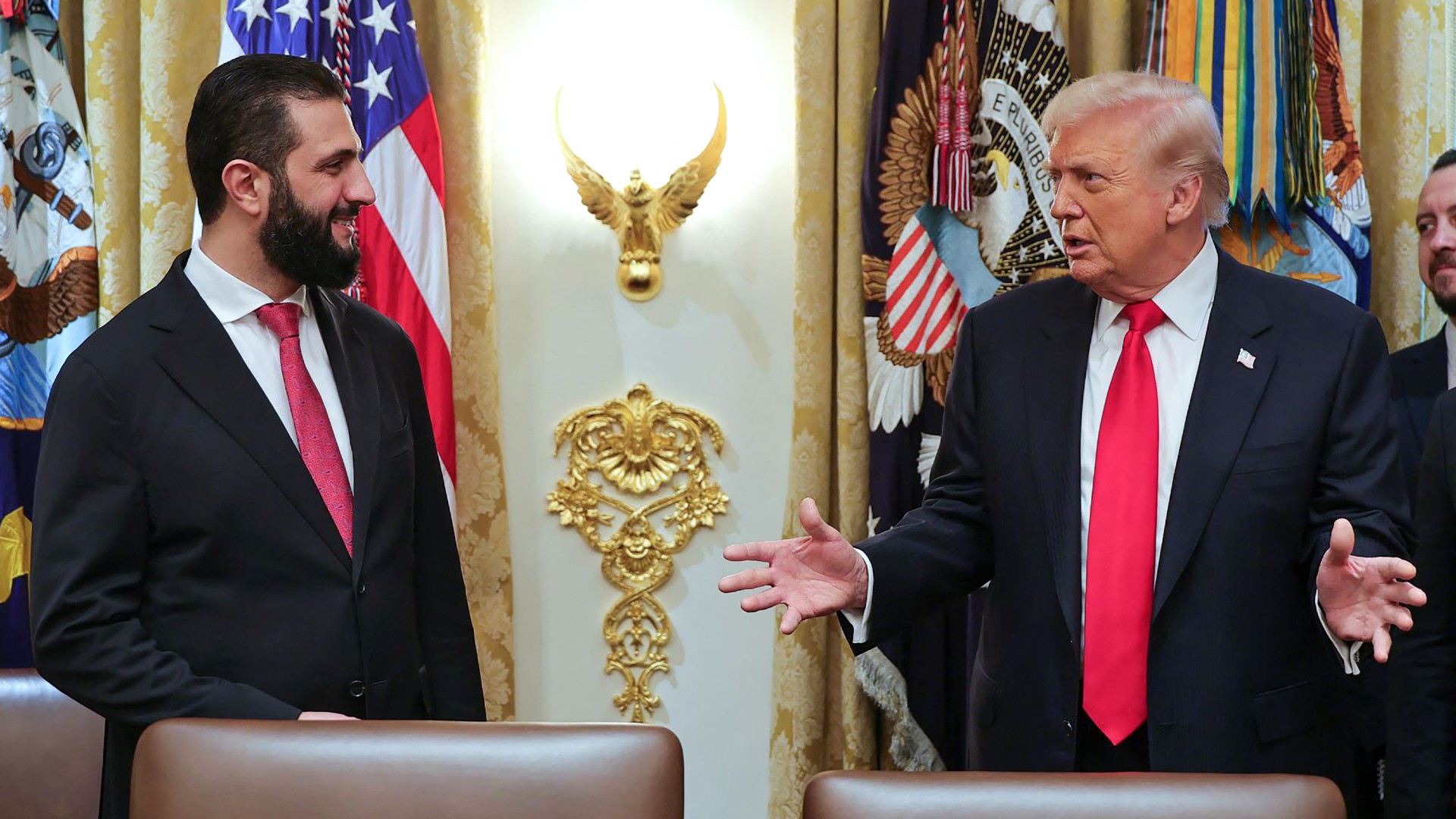
The United States is intensifying diplomatic efforts to broker a landmark security agreement between Israel and Syria, with multiple sources indicating a potential announcement could emerge within weeks. President Donald Trump has reportedly established a one-month deadline for Israeli Prime Minister Benjamin Netanyahu to conclude negotiations with Damascus, according to officials briefed on recent diplomatic exchanges.
The central obstacle preventing a comprehensive agreement remains Israel’s continued military presence on Mount Hermon, the highest peak in the region, which Israeli officials have declared a “red line” national security issue. The mountain was occupied following the collapse of Bashar al-Assad’s government in late 2024, extending beyond Israel’s longstanding control of the Golan Heights seized in 1967.
President Trump’s telephone conversation with Syrian President Ahmed al-Sharaa on Tuesday highlighted the administration’s commitment to Syrian unification without “separatism or federalism.” The Syrian government characterized the discussion as having proceeded “very well,” though declined to provide specific details regarding content.
Diplomatic progress has been significantly facilitated by US Special Envoy Thomas Barrack, whose advocacy for the agreement has faced opposition from within the administration, including US Central Command and Republican Senator Lindsey Graham. Barrack previously played a pivotal role in managing the transition of northeastern Syria following recent military operations by Sharaa’s forces.
According to sources familiar with the negotiations, the emerging framework includes provisions for Sweida province, currently under the control of Syrian Druze leader Sheikh Hikmat al-Hijri with Israeli support. The proposed agreement would prevent Syrian government military entry into the region while establishing negotiation processes for eventual integration.
The potential agreement builds upon the 1974 US-backed security arrangement between the nations, enhanced by recent Paris talks that established a joint communication mechanism for intelligence sharing and military de-escalation coordination. This mechanism aims to promptly address disputes and prevent misunderstandings between the historically adversarial nations.
Western officials note that Israel perceives the current US administration as divided on Syrian policy, potentially affecting negotiation dynamics. Despite American pressure, Israeli officials maintain their position on Mount Hermon remains non-negotiable, suggesting the four-week timeline might prove insufficient for resolution of this particular issue.