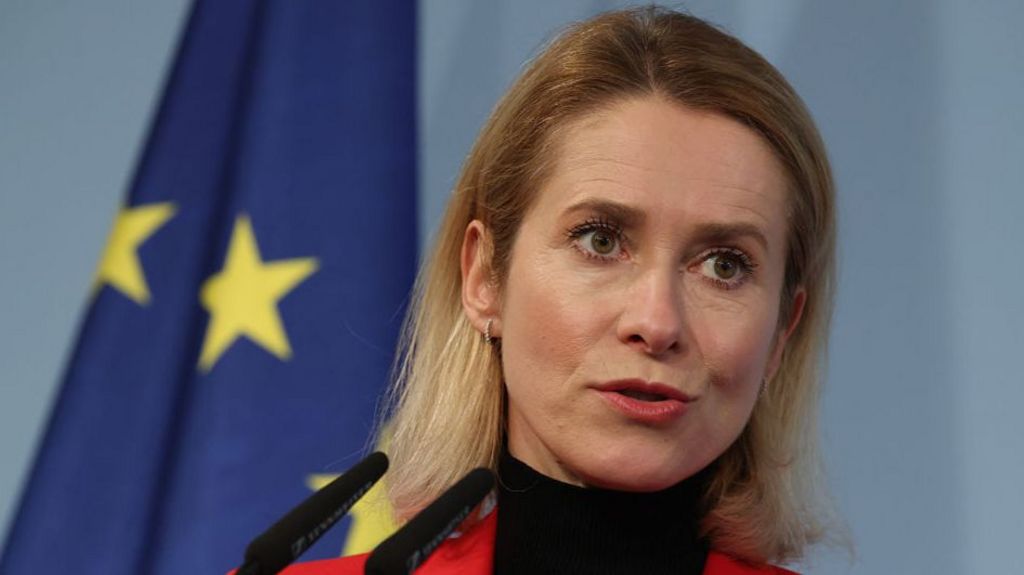
In a stark assessment of transatlantic relations, EU Foreign Policy Chief Kaja Kallas has declared that Europe is “no longer Washington’s primary centre of gravity,” signaling a fundamental reorientation in global power dynamics. The warning came during a Brussels defense conference where European leaders grappled with the implications of diminished American focus on European security.
Kallas emphasized that while the United States remains a vital partner, no great power has ever “outsourced its survival and survived.” She characterized Washington’s strategic pivot away from Europe as a structural rather than temporary shift, urging European nations to transition from thinking as individual states to “acting jointly as Europeans.”
The address follows contentious remarks from NATO Secretary General Mark Rutte, who dismissed European defense autonomy as unrealistic dreaming. Rutte’s comments provoked immediate pushback from French Foreign Minister Jean-Noël Barrot, who countered that “Europeans can and must take control of their security,” emphasizing that even the United States supports strengthening the European pillar of NATO.
The recent diplomatic crisis over Greenland exemplifies the deteriorating relations. Former President Donald Trump’s threat to acquire the semi-autonomous Danish territory—and subsequent tariff threats against European allies—highlighted what Kallas termed a “tectonic shift” in the relationship. Though Rutte reportedly helped de-escalate tensions during Davos discussions, the incident exposed fundamental fractures in the alliance.
EU Defence Commissioner Andrius Kubilius, speaking at the same conference, reinforced Kallas’s message, noting that the US now expects Europeans to assume greater defense responsibility as America diminishes its continental presence. He described Europe as “a giant, but a sleeping giant” that must rapidly build defensive independence “without delays and without excuses.”
The calls for European strategic autonomy come against the backdrop of Russia’s invasion of Ukraine, which has paradoxically strengthened NATO through the accession of Sweden and Finland while simultaneously exposing European defense vulnerabilities. Although NATO members have committed to increasing defense spending to 5% of GDP by 2035 under US pressure, Rutte suggested true autonomy would require 10% of GDP and independent nuclear capabilities—a prospect he warned would sacrifice the “ultimate guarantor of our freedom” in America’s nuclear umbrella.
The current deliberations represent the most significant reassessment of European security architecture since NATO’s 1949 founding, with leaders grappling with how to maintain alliance cohesion while developing meaningful strategic autonomy in an increasingly multipolar world.