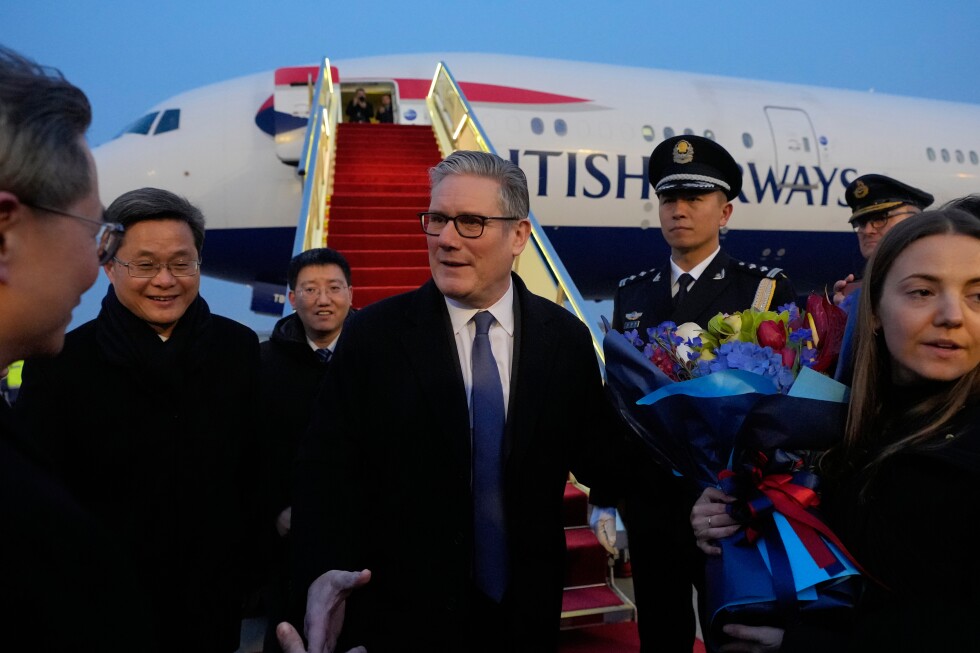
British Prime Minister Keir Starmer commenced a pivotal four-day diplomatic mission to China on Wednesday, marking the first visit by a UK leader since Theresa May’s 2018 trip. Arriving in Beijing with a delegation exceeding 50 business executives from prominent firms including British Airways, HSBC, and Jaguar Land Rover, Starmer articulated a pragmatic approach to Sino-British relations.
The Prime Minister emphasized that Britain would not face a binary choice between its transatlantic partnership with the United States and its economic relationship with China. “I’m a pragmatist, a British pragmatist applying common sense,” Starmer stated en route to Beijing, underscoring his intention to balance engagement with national security considerations.
This diplomatic overture occurs against a backdrop of significantly strained relations following concerns over Chinese espionage activities, Beijing’s support for Russia in the Ukraine conflict, and the crackdown on civil liberties in Hong Kong. Both nations now appear focused on finding common ground while managing differences, as recently advocated by China’s Ambassador to the UK Zheng Zeguang in a Times of London commentary.
The trade dynamics reveal substantial opportunities: China maintained an $85.1 billion goods trade surplus with Britain in 2025, while the UK held a services surplus. With China’s new policy directives encouraging domestic consumption and further opening its services sector, the China-Britain Business Council identifies significant growth potential for British companies in areas including finance, consulting, healthcare, and elderly care services.
Global trade uncertainties under the Trump administration have added urgency to diversifying economic partnerships. Both China and Britain have been affected by U.S. tariff policies, prompting similar moves by other nations including Canada’s recent trade mission to Beijing. However, such approaches carry risks, as demonstrated by Trump’s threat of 100% tariffs on Canada should it pursue a trade deal with China.
National security concerns remain paramount, with the UK having previously barred Chinese investment in sensitive telecommunications infrastructure and nuclear power projects. Notably, the British government recently approved plans for an expanded Chinese Embassy in London, despite concerns about potential espionage capabilities.
The human rights situation in Hong Kong presents particular complications for UK-China relations given historical ties. The recent conviction of British citizen Jimmy Lai under Hong Kong’s national security law adds diplomatic complexity to Starmer’s visit, with former Hong Kong governor Chris Patten urging firmness on human rights issues during the Prime Minister’s engagements with Chinese leadership.