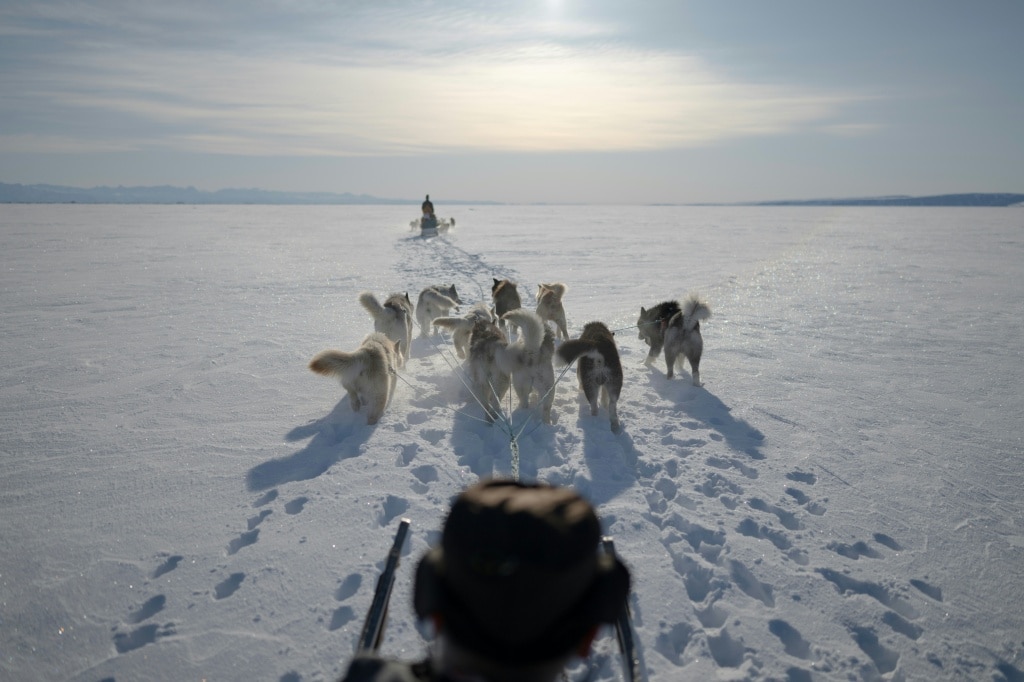
In the vast, frozen expanses of Greenland, an elite naval unit operates under some of Earth’s most extreme conditions. The Sirius Dogsled Patrol, despite former U.S. President Donald Trump’s dismissive remarks about Denmark’s Arctic defense capabilities, represents a critical and highly specialized military force. This unique patrol unit relies on traditional dogsled teams rather than modern technology to monitor a territory spanning the combined area of France and Spain.
Comprising six two-person teams each handling a dozen dogs, the patrol embarks on four-to-five-month missions during the harsh winter months when temperatures plummet to -40°C and darkness prevails for extended periods. Each day, these skilled operatives ski alongside their canine companions, covering approximately 30 kilometers while pulling sleds laden with 500 kilograms of essential supplies, including specially designed Arctic tents, food provisions, and fuel.
The strategic advantage of dogsleds over snowmobiles, according to former patrol member Sebastian Ravn Rasmussen, lies in their remarkable durability and reliability in extreme isolation. ‘When a snowmobile breaks down completely, your mission ends. With dogsleds, we can perform repairs and continue operations even if we lose several dogs, though at reduced capacity,’ Rasmussen explained. The patrol members are prepared for worst-case scenarios, including the possibility of consuming their dogs for survival, however remote that likelihood may be.
Their mission extends beyond simple reconnaissance. The Sirius Patrol provides vital monitoring capabilities that technological alternatives cannot match in the Arctic’s unique conditions. As Rasmussen noted, aerial surveillance proves ineffective when ‘everything is white’ from above, making ground-level detection essential for identifying unauthorized activities. The unit has intercepted Russian expeditions lacking proper permits and assisted stranded cruise ships, including a notable 2023 grounding incident.
Selection for this elite force remains exceptionally rigorous, with only 5-6 candidates chosen annually from nearly 100 applicants after completing Denmark’s basic military training and passing intensive physical and psychological evaluations. Successful recruits commit to a 26-month deployment in Greenland without home visits. While most members are Danish, a few Greenlanders have joined the ranks over the years, though no women have applied to date.
The patrol’s historical significance dates to World War II when similar units discovered and destroyed German weather stations that provided crucial intelligence for U-boat operations in the Atlantic. Denmark formalized this military presence in 1950, establishing the permanent Sirius Dogsled Patrol that continues to serve as Greenland’s first line of defense in the rapidly changing Arctic region.