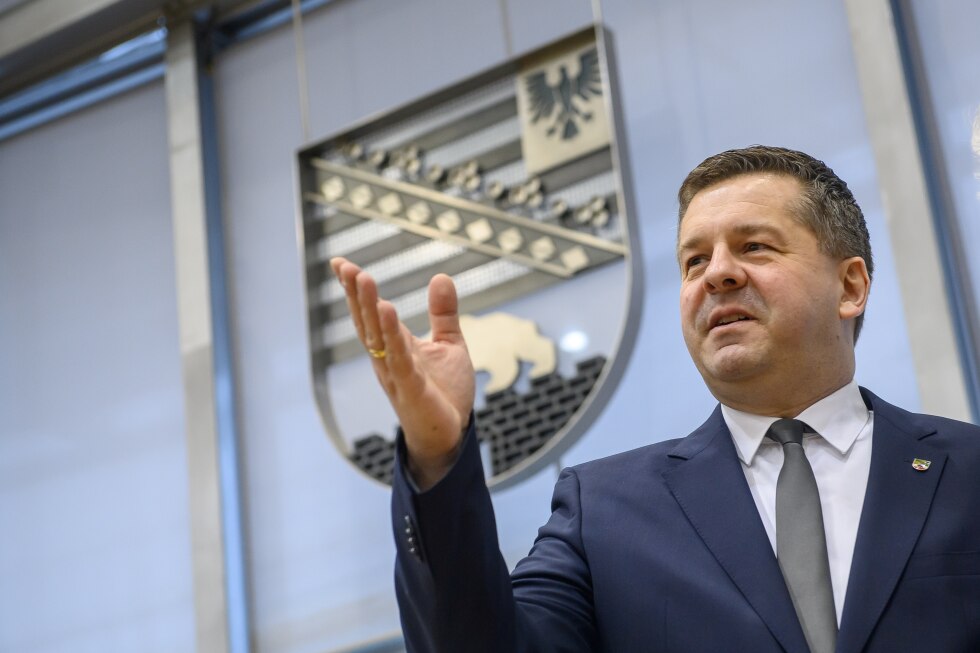
In a strategic political maneuver, lawmakers in Germany’s eastern state of Saxony-Anhalt have orchestrated a midterm gubernatorial transition to fortify defenses against the surging far-right Alternative for Germany (AfD) party. On Wednesday, the state legislature elected 46-year-old Sven Schulze of Chancellor Friedrich Merz’s Christian Democratic Union (CDU) to replace veteran Governor Reiner Haseloff, who has led the region of 2.2 million people since 2011.
This leadership change, while technically following established German political conventions for succession planning, carries exceptional strategic significance given the scheduled September 6 regional election. The 71-year-old Haseloff initially intended to complete his term but reversed course this month amid concerning polling data showing substantial AfD gains.
The AfD, which secured its position as Germany’s second-largest parliamentary party in last year’s federal elections, demonstrates particularly strong support in the less prosperous eastern regions that formerly comprised communist East Germany. While immigration opposition remains the party’s signature issue, it has effectively capitalized on broader public discontent regarding economic stagnation and other societal concerns.
Historical precedent suggests incumbency advantage could prove crucial—Haseloff himself successfully fended off an AfD challenge in the 2021 state election. Schulze, previously Saxony-Anhalt’s Economy Minister, would have lacked this advantage without the early transition. Despite achieving first-place finishes in neighboring Thuringia’s 2024 election, AfD has yet to secure governing power at the state level, as mainstream parties maintain a unified front in refusing coalition partnerships with the far-right movement.