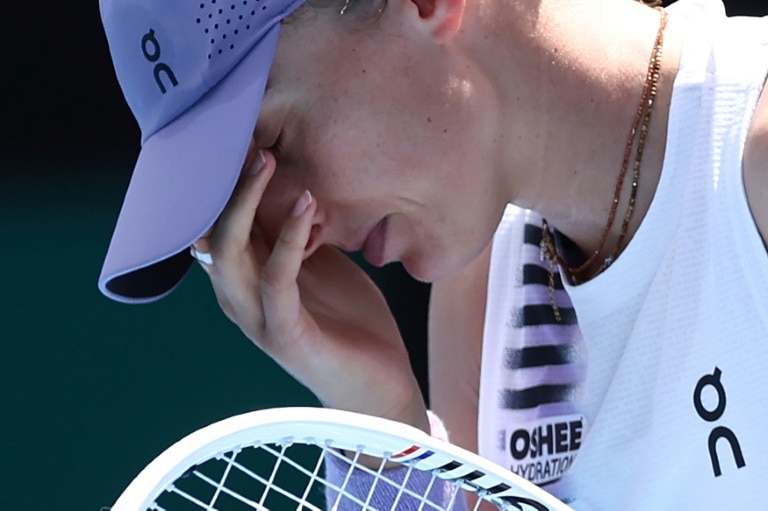
A coalition of elite tennis professionals has united in support of Coco Gauff’s appeal for enhanced privacy protections during major tournaments, with World No. 2 Iga Swiatek delivering a particularly vivid critique comparing the current surveillance environment to being treated like “animals in a zoo.”
The movement gained momentum following Gauff’s quarter-final elimination at the Australian Open, where broadcast cameras captured the American player’s private emotional moment after her defeat. The third-seeded athlete had deliberately sought solitude in a secluded stadium area to process her frustration away from public view, only to discover the moment had been televised.
“I specifically attempted to locate a space where my reaction wouldn’t be broadcast,” Gauff explained. “The fact that this was still captured suggests we need to have serious conversations about privacy boundaries. Currently, the locker room stands as our only truly private sanctuary.”
Swiatek, who also exited in the quarter-finals, expanded on the metaphor while acknowledging its deliberate exaggeration: “The fundamental question is whether we’re professional athletes or zoo specimens under constant observation, even during our most private moments. While competition viewing is expected, the perpetual monitoring extends beyond reasonable boundaries.”
The Polish star spoke from recent experience, having herself become unintended social media content when footage circulated of her being denied arena access for forgetting her accreditation. “Our profession involves being watched during matches and press conferences,” Swiatek noted. “Becoming meme material for accidental moments outside that scope feels unnecessary and invasive.”
Sixth-seeded Jessica Pegula, who advanced to the semi-finals, endorsed her colleagues’ concerns regarding the omnipresent broadcasting apparatus. “Coco’s assessment about locker rooms being our only refuge is unfortunately accurate,” Pegula stated. “The sensation of perpetual surveillance while simply navigating your daily routine creates an uncomfortable environment. I’ve witnessed viewers zooming in on players’ personal devices online—such intrusions cross clear ethical lines.”
While American player Amanda Anisimova expressed greater personal tolerance for the scrutiny, she acknowledged the problematic nature of broadcasting private distress: “There’s certainly enjoyment in sharing positive moments publicly. However, disseminating footage of athletes during vulnerable periods without consent presents genuine ethical concerns. Coco had no agency in that decision, which makes it particularly difficult.”