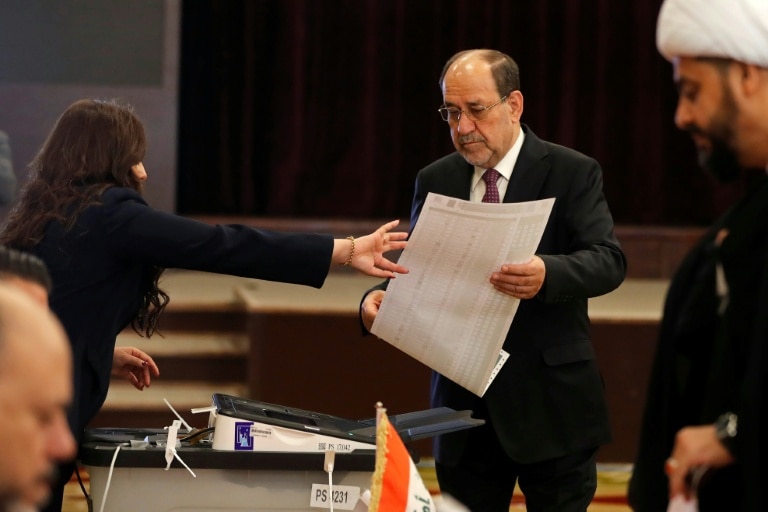
Former U.S. President Donald Trump has issued a stark warning to Iraq regarding its political future, threatening to terminate all American support if former Prime Minister Nouri al-Maliki reassumes power. Through his Truth Social platform on Tuesday, Trump characterized Maliki’s potential return as a “very bad choice” for the nation, referencing the former leader’s previous tenure which he claimed plunged Iraq into “poverty and total chaos.”
The political context revolves around the Coordination Framework, a Shiite parliamentary alliance with varying Iranian affiliations, which recently endorsed Maliki as their prime ministerial candidate. This development follows Iraq’s parliamentary elections and occurs amid delicate U.S.-Iraq relations. Trump explicitly stated that Maliki’s “insane policies and ideologies” would result in complete withdrawal of American assistance, dramatically concluding with his trademark slogan adapted for Iraq: “MAKE IRAQ GREAT AGAIN!”
Historical tensions underscore this diplomatic confrontation. Maliki previously left power in 2014 following U.S. pressure, with American officials blaming his sectarian policies for creating conditions that enabled the Islamic State’s rise. The United States maintains significant economic leverage over Iraq through an arrangement established after the 2003 invasion, whereby most Iraqi oil revenue—accounting for approximately 90% of government income—is held at the Federal Reserve Bank in New York.
The Trump statement aligns with recent diplomatic communications. Secretary of State Marco Rubio reportedly expressed similar concerns to current Prime Minister Mohammed Shia al-Sudani, and political sources indicate Washington formally communicated its negative view of Maliki to Iraqi politicians.
Iraq’s political process has encountered obstacles, with parliament abruptly delaying Tuesday’s presidential election after Kurdish parties requested additional time to reach consensus. Traditionally, Iraq’s presidency goes to a Kurd while the prime minister comes from the Shiite majority, a convention established after Saddam Hussein’s fall.
Regional implications are substantial. A Maliki-led government would significantly benefit Tehran amid Iran’s recent setbacks, including domestic protests and reduced influence in Syria. The current Sudani administration has maintained smoother relations with Washington, cooperating on security matters including Islamic State prisoner transfers and restraining Iran-aligned armed groups.
Trump’s intervention marks a notable departure from conventional diplomatic practice, continuing his pattern of open political meddling in foreign nations. This approach has recently included endorsing right-wing candidates in European and Latin American elections, plus authorizing military action in Venezuela.