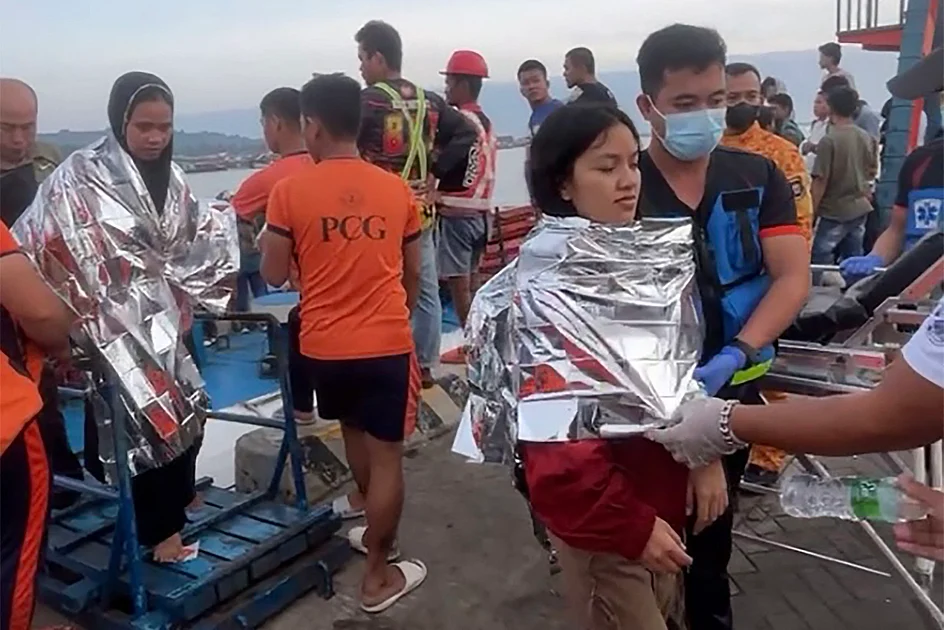
Philippine authorities have imposed an immediate suspension on all passenger vessels operated by Aleson Shipping Lines following the catastrophic sinking of MV Trisha Kerstin 3 that claimed 18 lives. The dramatic maritime disaster occurred during early morning hours on Monday off the southwestern coast of Mindanao, with 344 passengers and crew aboard the ill-fated ferry.
Transportation Secretary Giovanni Lopez announced the comprehensive grounding order on Tuesday, revealing that the maritime regulator and coast guard would conduct an intensive safety audit over the next ten days. The decisive action comes as President Ferdinand Marcos Jr. ordered a full-scale investigation into the tragedy. “If it turns out the shipowners were deficient, they will expect the full force of the law,” Lopez stated during a press briefing, emphasizing the government’s zero-tolerance approach to maritime safety violations.
The sunken vessel now rests approximately 76 meters (249 feet) beneath the ocean surface, creating challenging conditions for recovery operations. Coast Guard Commandant Ronnie Gavan confirmed that 10 individuals remain missing, including the ship’s captain, eight crew members, and a safety marshall. Search-and-rescue missions continue as priority, with 16 technical divers and remotely operated vehicles being deployed from Manila to assist in both recovery efforts and the forthcoming investigation.
Disturbingly, this incident marks the second tragedy on nearly identical routes within three years. In 2023, the Lady Mary Joy 3 ferry fire resulted in 31 fatalities—another vessel owned by the same shipping company. Lopez disclosed that Aleson Shipping Lines has experienced 32 recorded safety “incidents” at sea, though specific details were not immediately provided.
Survivor accounts paint a troubling picture of potential negligence. Aquino Sajili, a 53-year-old lawyer who survived the sinking, recounted to AFP that crew members failed to alert passengers as the vessel began tilting dangerously. “No one from the crew alerted us,” Sajili described, noting how passengers rushed to one side in a desperate attempt to counterbalance the listing ship before hearing a “loud snap” that preceded rapid submersion. Survivors spent hours floating in life jackets awaiting rescue, with Sajili indicating that legal action against the shipping company appears inevitable.
The Philippines continues to grapple with maritime safety challenges in its extensive archipelago nation, where inter-island ferries serve as vital transportation links between more than 7,000 islands. This latest incident recalls previous tragedies including the 2015 Leyte Island capsizing (60+ fatalities) and the 1987 Dona Paz collision with an oil tanker—the world’s worst peacetime maritime disaster claiming over 4,000 lives.