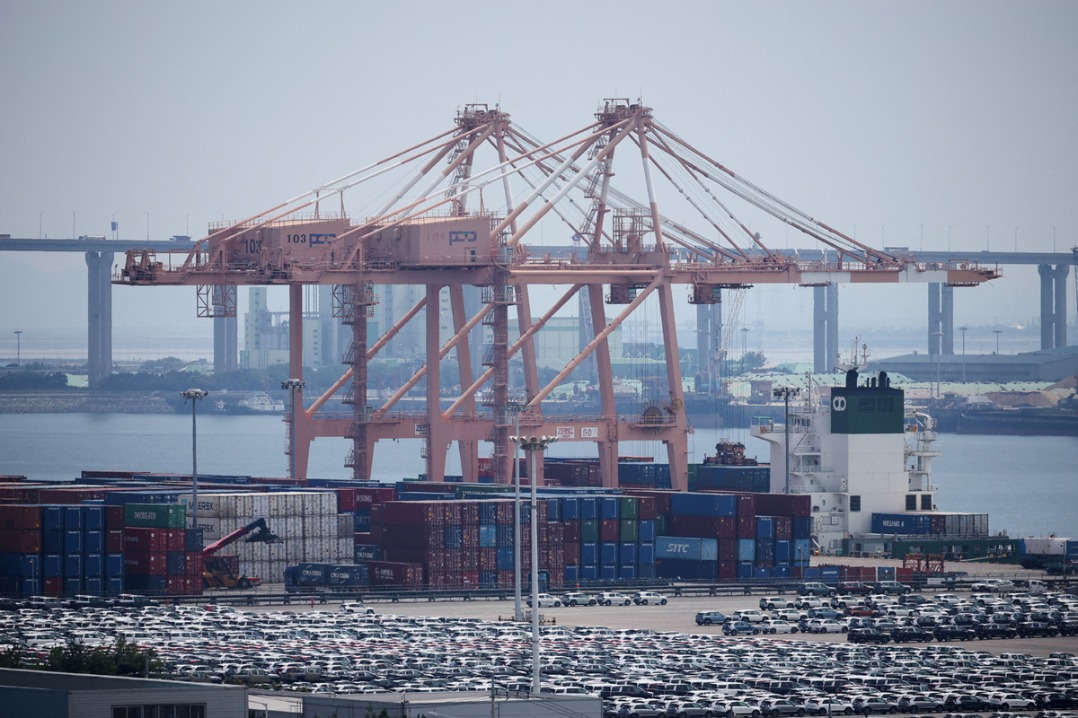
South Korean officials have stated they have received no formal communication from Washington regarding President Donald Trump’s announced plan to increase tariffs on select South Korean goods from 15% to 25%. The presidential office in Seoul confirmed this lack of official notification on Tuesday, following Trump’s Monday declaration.
In response to the potential economic measure, South Korea is mobilizing its diplomatic and trade resources. An interagency meeting is scheduled to convene later today to coordinate the government’s approach. Furthermore, Trade Minister Kim Jung-kwan, currently concluding an official visit to Canada, will extend his travel itinerary to include the United States for urgent discussions with US Commerce Secretary Howard Lutnick.
President Trump justified the proposed tariff escalation by accusing the South Korean legislature of failing to enact a previously agreed bilateral trade pact. This development threatens to destabilize recent trade accommodations between the two nations.
According to reports from Yonhap News Agency, a foundation for this agreement was established during the October summit in Gyeongju. A resulting joint fact sheet outlined a compromise: The United States would reduce tariffs on South Korean products, including automobiles, contingent upon South Korea committing to $350 billion in investments within the US. A subsequent memorandum, signed on November 14, detailed that these tariff reductions would be applied retroactively from the first day of the month in which the relevant implementation legislation was submitted to South Korea’s National Assembly.
The ruling Democratic Party did submit the required special bill on US investment on November 26. Honoring the agreement, the US retroactively lowered tariffs on South Korean automobiles to 15% effective December 4. The announced tariff hike appears to reverse this recent progress, creating fresh uncertainty in US-South Korea trade relations.