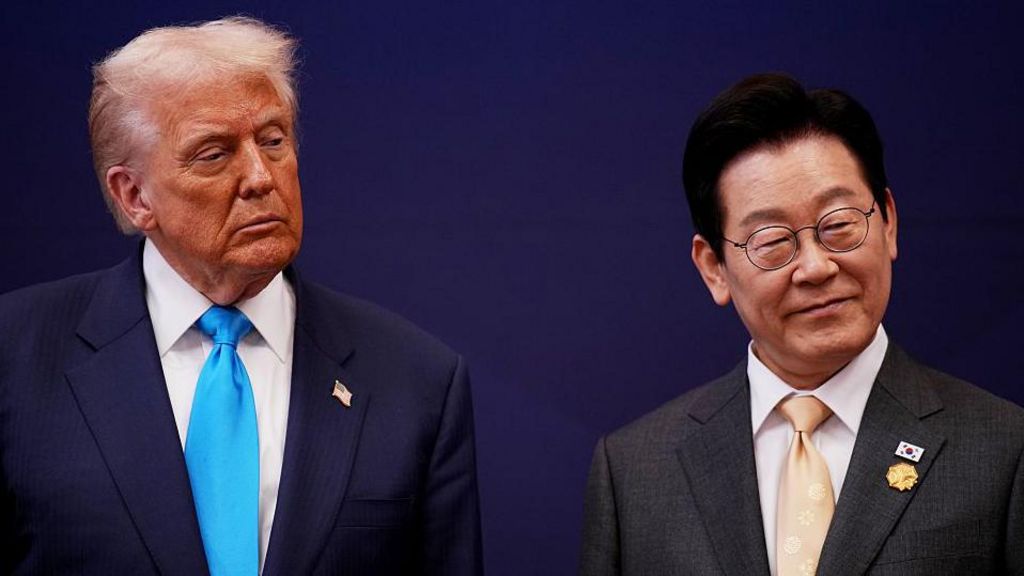
In a significant escalation of trade policy, former US President Donald Trump has declared a substantial increase in tariffs on South Korean imports, raising them to 25%. The announcement was made via social media, where Trump accused Seoul of failing to uphold commitments under a bilateral trade agreement finalized last October.
The tariff hike affects a broad range of products, including automobiles, lumber, pharmaceuticals, and various other goods subject to reciprocal tariffs. Trump justified the move by stating that South Korean lawmakers had been ‘slow to approve the deal,’ contrasting it with what he described as swift US action to reduce its own tariffs in accordance with the agreement.
South Korea has responded with concern, indicating it had not received official notification of the tariff decision and is seeking urgent discussions with Washington. The country’s Industry Minister, Kim Jung-kwan, is reportedly cutting short a trip to Canada to arrange immediate talks with US Commerce Secretary Howard Lutnick.
The contentious trade deal, reached in October, included a significant pledge from South Korea to invest approximately $350 billion in the United States, with portions directed toward the shipbuilding sector. Subsequent negotiations in November established that the US would reduce certain tariffs once South Korea initiated its domestic approval process. The agreement was submitted to South Korea’s National Assembly on November 26 and is currently under review, with local media projecting likely passage in February.
This development represents another instance of Trump utilizing tariffs as a primary instrument of foreign policy during his second term. The move follows recent threats against Canada, where Trump warned of 100% tariffs if Ottawa pursued a trade agreement with China. Canadian Prime Minister Mark Carney has since clarified that no such deal with China is under consideration, with Canadian officials reportedly communicating this position to their US counterparts.
The tariff strategy echoes previous confrontational approaches, including Trump’s earlier threats against eight countries, including the UK, regarding their opposition to US interests in Greenland. While those particular tariff threats were eventually withdrawn citing progress toward a ‘future deal,’ the episodes have contributed to strains in US relations with NATO allies and trading partners.