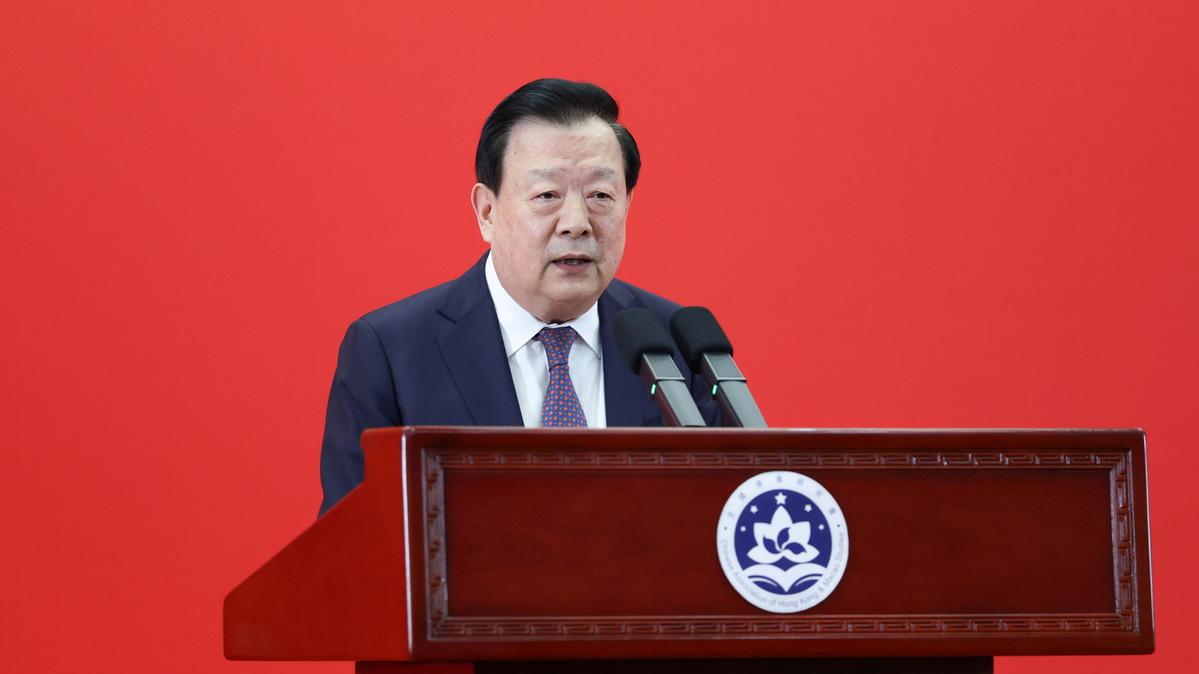
China’s senior official responsible for Hong Kong and Macao affairs has called for strengthened commitment to the executive-led governance model in both special administrative regions. Xia Baolong, director of the Hong Kong and Macao Work Office of the Communist Party of China Central Committee, emphasized the system’s critical role in ensuring administrative efficiency and alignment with national development objectives during a Beijing seminar on January 26, 2026.
The seminar, organized by the Chinese Association of Hong Kong and Macao Studies, focused on enhancing governance frameworks in both regions. Xia described the executive-led principle as fundamental to the political architecture of the SARs and essential for the comprehensive implementation of the “one country, two systems” principle. He asserted that this governance model has demonstrated both vitality and superiority, particularly evident in Hong Kong’s transition from stability to prosperity.
Xia stressed that effective governance requires coordinated synergy between executive, legislative, and judicial branches, with all components operating on “the same stage” rather than working at cross-purposes. His comments come following recent legislative elections in both Hong Kong and Macao, with Xia urging newly elected lawmakers to deepen their patriotic commitment and actively participate in regional development initiatives.
The senior official called on SAR governments to function as “primary stewards” of local governance, rallying legislative, judicial, and community stakeholders behind national development priorities. He specifically emphasized the need to align regional governance with China’s 15th Five-Year Plan (2026-30), encouraging innovation in administrative methods and leveraging legal authorities to drive reform.
Hong Kong Chief Executive John Lee Ka-chiu responded to Xia’s remarks through social media, characterizing executive-led governance as both a “fundamental requirement” under “one country, two systems” and a “staunch pillar” of Hong Kong’s continued success. Lee committed to enhancing governance efficiency and building a results-oriented administration, requesting support and oversight from the new Legislative Council.
Legislators from both regions expressed alignment with the governance direction. Hong Kong lawmaker Michael Ngai Ming-tak acknowledged his responsibility to support government efficiency through pragmatic policies, while Macao legislator Jose Chui Sai-peng pledged to fulfill a “bridging role” between government and community needs.
The Chinese General Chamber of Commerce in Hong Kong endorsed the approach, with chairman Jonathan Choi Koon-shum emphasizing that implementing the executive-led system and cultivating constructive executive-legislative relations would enable deeper reforms and stronger economic growth.