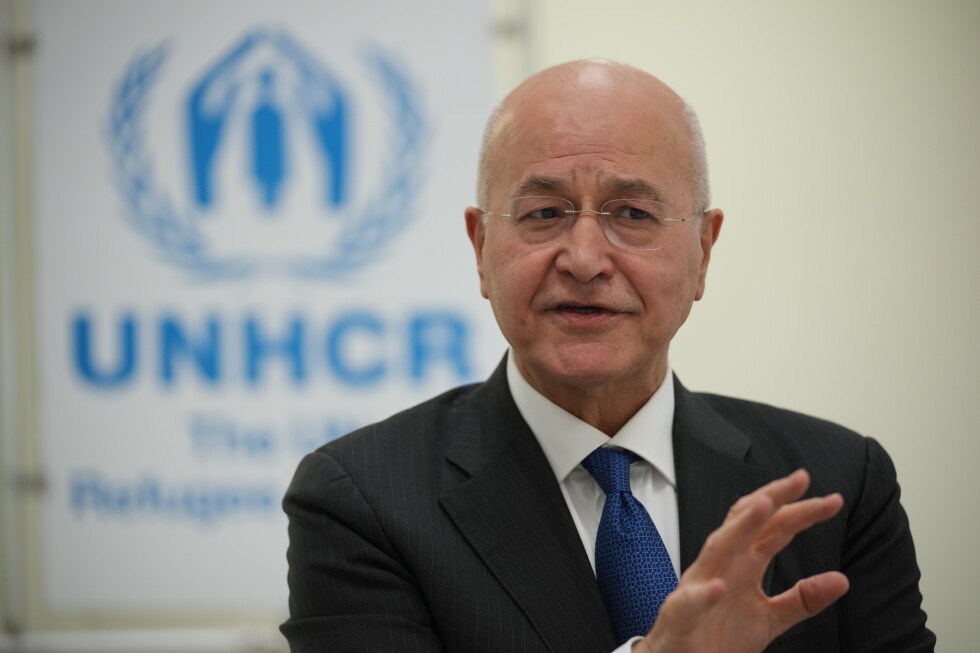
ROME — The newly appointed United Nations High Commissioner for Refugees, Barham Salih, issued a stark warning Monday about the unprecedented challenges facing global refugee protection systems. Speaking in his first major interview since assuming office on January 1st, the former Iraqi president described the current situation as “a very difficult moment in history” that demands innovative solutions and international solidarity.
The UNHCR faces a catastrophic funding shortfall following a dramatic reduction in U.S. contributions, which have plummeted from $2.1 billion to approximately $800 million for 2024-2025. Despite this drastic cut, the United States remains the agency’s largest single donor. Salih emphasized that while resources are being “constrained and limited in very, very significant ways,” he maintains hope that global humanity will prevail in supporting the world’s displaced populations.
With 117.3 million forcibly displaced people from 194 countries worldwide—including approximately 30 million refugees requiring direct support—the funding crisis couldn’t come at a worse time. Salih stressed the urgent need to safeguard the 1951 Refugee Convention amid growing repression of immigrants and attempts to redefine international asylum protocols.
The High Commissioner, who himself fled Iraq twice during Saddam Hussein’s regime, brings personal experience to his role. His background informs his perspective that “refugees are not just numbers and victims” but individuals who can thrive given proper protection and opportunities.
Salih has already undertaken field visits to refugee camps in Chad and Kenya, witnessing firsthand the conditions of those displaced by conflicts in Sudan, Somalia, Congo, and Ethiopia. He has also secured support from Pope Leo XIV during a Vatican meeting, noting the crucial role of faith-based organizations in refugee advocacy.
Despite the overwhelming challenges, Salih described his new position as “a great honor” and remains committed to making UNHCR more cost-effective while maintaining essential services for those most in need.