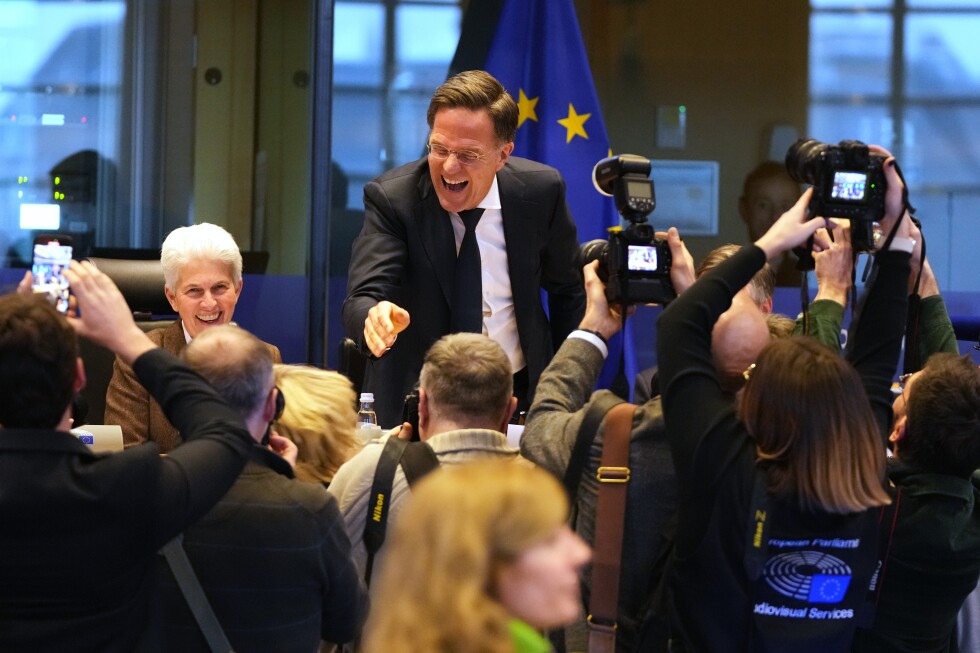
BRUSSELS — NATO Secretary-General Mark Rutte delivered a stark warning to European Union legislators on Monday, asserting that European nations remain fundamentally incapable of autonomous self-defense without American military backing. Rutte emphasized that achieving true strategic independence would require more than doubling current defense spending targets and developing independent nuclear capabilities—a financially prohibitive endeavor.
During his address at the EU parliamentary session, Rutte explicitly dismissed notions of European strategic autonomy as unrealistic. “Should anyone believe that the European Union or Europe collectively could defend itself absent American support, they are merely indulging in fantasy,” he stated. “The transatlantic partnership remains indispensable—we mutually depend on one another.”
The Secretary-General’s remarks arrive amid escalating tensions within NATO following recent controversies involving former U.S. President Donald Trump. These included renewed threats to annex Greenland—a semi-autonomous Danish territory—and the imposition of tariffs against its European supporters. Although these threats were subsequently withdrawn following diplomatic intervention and a tentative agreement regarding the mineral-rich region, the incidents highlighted the alliance’s fragility.
Rutte referenced the July NATO summit in The Hague, where European members (excluding Spain) and Canada committed to matching U.S. defense spending relative to economic output within ten years. The agreement stipulated elevating core defense expenditure to 3.5% of GDP, with an additional 1.5% allocated to security infrastructure—totaling 5% of GDP by 2035.
However, Rutte cautioned that truly independent defense would necessitate expenditures approaching 10% of GDP, alongside the development of an independent nuclear deterrent costing “billions upon billions of euros.” He underscored Europe’s continued reliance on the U.S. nuclear umbrella as “the ultimate guarantor of our freedom.”
These developments occur against growing French-led advocacy for European “strategic autonomy,” a movement that gained momentum after the Trump administration indicated shifted security priorities and suggested European nations should assume greater defense responsibility.