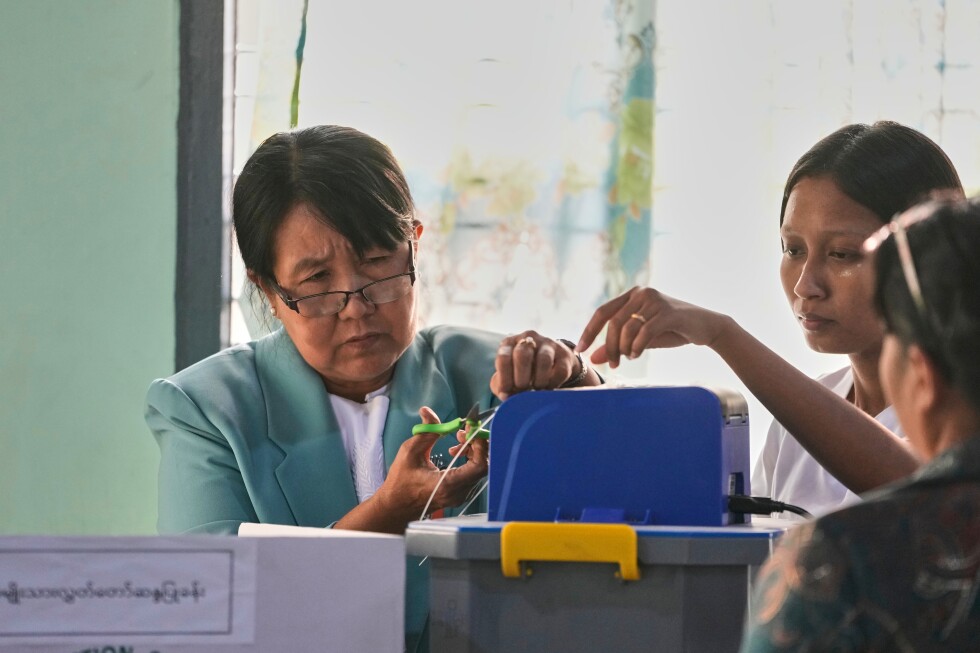
BANGKOK (AP) — Myanmar’s military-aligned Union Solidarity and Development Party (USDP) announced Monday it had secured victory in the nation’s first electoral process since the 2021 armed seizure of power, establishing the foundation for a new governing administration.
The anticipated triumph of the former general-led party occurred within a tightly controlled electoral environment that systematically excluded prominent opposition factions and suppressed dissenting voices. The military government further consolidated power through constitutional provisions automatically reserving 25% of parliamentary seats for armed forces personnel, effectively ensuring continued dominance by military interests and their political allies.
International observers and critics have universally condemned the polling process as fundamentally flawed, characterizing it as a strategic maneuver to legitimize military rule following the ousting of Aung San Suu Kyi’s democratically elected government. The violent takeover precipitated nationwide resistance that has subsequently evolved into full-scale civil conflict.
The multi-phase election conducted between December 28 and January 25 witnessed significant participation limitations, with 67 of Myanmar’s 330 townships—primarily those under opposition armed group control—unable to participate. This reduced the total available seats in the 664-member national parliament to 586.
Despite participation from over 4,800 candidates representing 57 political organizations, only six parties mounted nationwide campaigns, reflecting the constrained political landscape.
An anonymous USDP senior official disclosed to The Associated Press that the party secured 57 of 61 contested lower house seats during Sunday’s final voting phase. Preliminary calculations indicate the military-aligned party will hold at least 290 parliamentary positions across both chambers. Combined with the military’s constitutionally mandated 166 seats, this establishes a commanding majority exceeding 450 seats—well beyond the 294 required for government formation.
The electoral process will culminate with parliamentary members and military appointees selecting a president from three nominated candidates, with current military government leader Senior General Min Aung Hlaing widely anticipated to assume the presidency.
United Nations Special Rapporteur Tom Andrews has urged global rejection of both the election results and subsequent power structures, while Min Aung Hlaing defiantly stated that international recognition remains irrelevant to Myanmar’s political process.