As the world anticipates the Milan-Cortina Winter Olympic Games opening ceremony on February 6, a retrospective examination reveals how certain legendary athletes fundamentally transformed figure skating. These pioneers not only claimed Olympic glory but also reshaped the sport’s technical, artistic, and cultural dimensions.
Norwegian sensation Sonja Henie emerged as the sport’s first global celebrity, achieving an unprecedented triple gold medal streak in individual figure skating. Her innovative adoption of white boots and shorter skirts revolutionized athletic apparel, enhancing both movement and presentation. Beyond the rink, Henie successfully transitioned to Hollywood, becoming one of its highest-paid stars and introducing cinematic audiences to skating through her signature swirling routines. Her career, however, was not without controversy, particularly regarding her 1936 meeting with Adolf Hitler following her victory in Garmisch.
American Dick Button revolutionized skating’s technical aspects while becoming its definitive voice. The athletic pioneer secured the first U.S. skating gold in 1948 at St. Moritz, where he debuted the groundbreaking double Axel jump. Four years later in Oslo, he achieved perfection with the first successfully landed triple jump. Following his competitive career, Button became the sport’s authoritative television commentator, providing passionate and insightful analysis that educated generations of viewers over six decades.
East German champion Katarina Witt dominated 1980s figure skating with four world titles and back-to-back Olympic gold medals, matching Henie’s historic achievement. Her 1984 victory over American Rosalynn Summers in Sarajevo and the dramatic 1988 ‘Battle of the Carmens’ against Debi Thomas in Calgary became defining moments in skating history. Witt’s fashion choices proved equally impactful—her feather-trimmed one-piece costume prompted the International Skating Union to establish the ‘Katarina rule’ mandating skirts for female competitors. Following German reunification, Witt made an emotional comeback at Lillehammer in 1994, performing a routine dedicated to war-torn Sarajevo that symbolized both personal and political transformation.
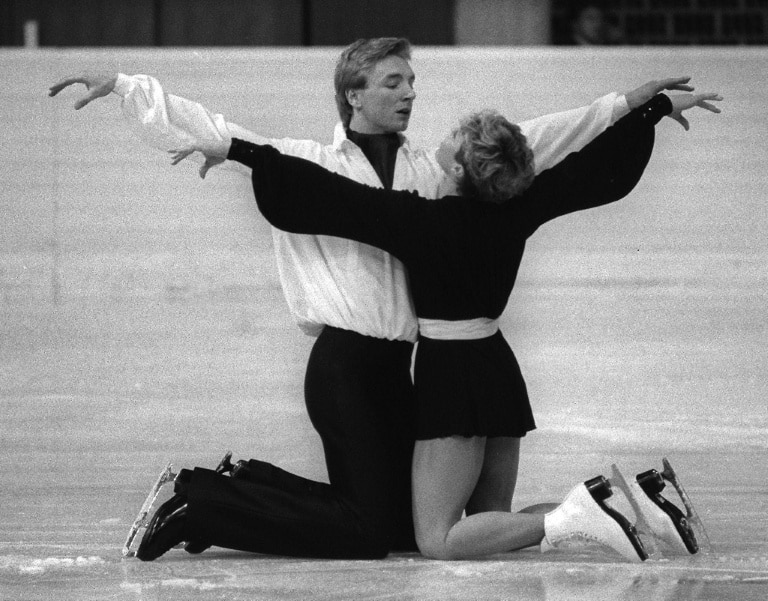
British ice dancers Jayne Torvill and Christopher Dean fundamentally reimagined their discipline with narrative-driven performances. Their 1984 Sarajevo routine set to Ravel’s Bolero earned perfect artistic scores from all nine judges through innovative choreography that built anticipation before technically beginning. The former insurance clerk and policeman abandoned conventional musical fragmentation in favor of cohesive storytelling, earning the first perfect score under the old marking system at the 1983 World Championships. Their professional success culminated in an unexpected Olympic return in 1994, where they captured bronze while in their mid-30s.