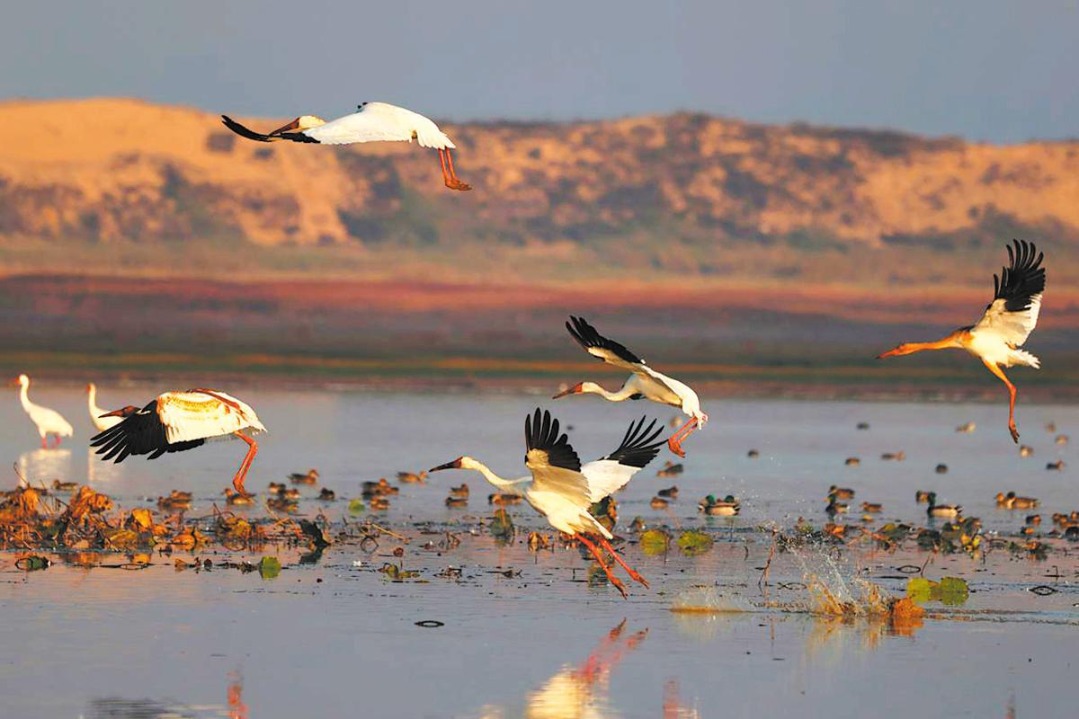
China’s comprehensive wetland restoration initiative is demonstrating remarkable success as critical habitats along the East Asian-Australasian Flyway witness unprecedented surges in migratory bird populations. At Poyang Lake, China’s largest freshwater lake and a crucial wintering terminus, systematic ecological management has transformed the region into a biodiversity hotspot supporting nearly 400 bird species and approximately 700,000 birds during wintering seasons.
The transformation stems from a multi-faceted approach combining advanced technology with traditional conservation methods. The Jiangxi Poyang Lake National Nature Reserve has implemented an intelligent management platform featuring high-definition cameras and sensors that operate continuously, utilizing artificial intelligence to identify and document bird species, population numbers, and distribution patterns. This technological integration complements drone patrols on preset flight routes and ground-based monitoring, creating a comprehensive ecological oversight system.
Beyond technological innovation, regulatory measures have played a pivotal role. Since January 2020, a comprehensive fishing ban has been enforced throughout the Jiangxi section of the Yangtze River and Poyang Lake basin. Additionally, Jiangxi implemented China’s first provincial regulation specifically targeting phosphorus pollution in lake basins in January 2024, significantly improving water quality and ecosystem health.
The conservation success extends beyond Poyang Lake. In Heilongjiang province’s Sanjiang Plain, large-scale wetland restoration has revitalized the northern starting point of the migration corridor. Over 3,000 hectares of wetlands have been restored following the implementation of the Heilongjiang Wetland Protection Regulation a decade ago, with the province now recording 390 bird species, including 297 migratory and summer-resident species.
Critical stopover sites like Tianjin’s Qilihai Wetland have implemented sophisticated management strategies, including scientific water level adjustments during migration seasons to facilitate feeding for species such as oriental storks. These measures have yielded significant breakthroughs, including the first confirmed nesting of spoonbills in the western wetland area.
International collaboration has further strengthened these efforts. The Food and Agriculture Organization and Global Environment Facility’s provincial-level wetland protection project has trained over 3,000 government officials and technicians through more than 60 capacity-building programs, fostering expertise in wetland management, biodiversity monitoring, and sustainable development.
The appearance of rare species like the great white pelican—typically found in Africa, eastern Europe, and parts of South and Central Asia—at Poyang Lake signals the exceptional improvement in ecosystem conditions. Conservation experts note that healthy wetland environments, abundant food resources, and enhanced safety measures are attracting these unusual visitors, demonstrating that years of dedicated protection along the entire flyway are converging to create optimal conditions at migration destinations.