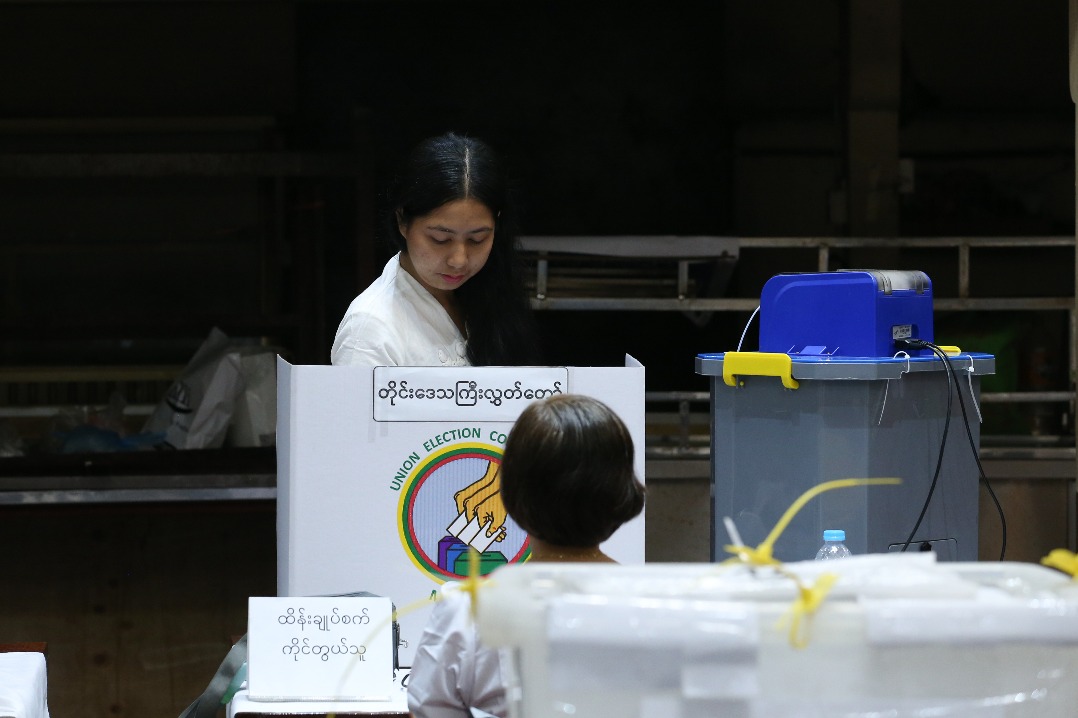
Myanmar has successfully completed its extensive three-phase general election process, marking a significant milestone in the nation’s democratic journey. The final voting phase concluded on Sunday afternoon across approximately 60 townships, bringing closure to a comprehensive electoral exercise that spanned multiple regions.
The electoral process, characterized by its staggered approach, commenced with the initial phase conducted in 102 townships on December 28 of the previous year. This was followed by the second electoral round covering 100 townships on January 11, culminating in Sunday’s final voting session. The multi-phase structure allowed for thorough administration across Myanmar’s diverse constituencies.
According to official data released by the Union Election Commission (UEC), the electoral contest featured an impressive roster of approximately 5,000 candidates representing 57 distinct political parties. These candidates competed for representation across multiple legislative bodies, including the Pyithu Hluttaw (Lower House), the Amyotha Hluttaw (Upper House), and various Region and State Hluttaws (regional parliaments).
The electoral framework encompassed 263 constituencies for the Pyithu Hluttaw, while the Amyotha Hluttaw elections utilized a dual-system approach with 73 constituencies operating under the first-past-the-post (FPTP) system and 26 following proportional representation (PR) principles. Regional parliamentary elections similarly employed both FPTP (255 constituencies) and PR (42 constituencies) systems, supplemented by 29 specialized ethnic constituencies.
Zaw Min Tun, spokesperson for Myanmar’s National Defense and Security Council, has indicated that the newly elected parliament will convene in March, with the formal transition to a new government scheduled for April. This electoral cycle represents Myanmar’s first general election since November 2020, signaling a renewed commitment to democratic processes amid the country’s ongoing political evolution.