A formidable Arctic onslaught has unleashed a cascade of snow and freezing rain across the western and central United States, advancing relentlessly toward the Northeast. This immense weather system poses severe threats of widespread blackouts, transportation gridlock, and perilously cold conditions for tens of millions of Americans.
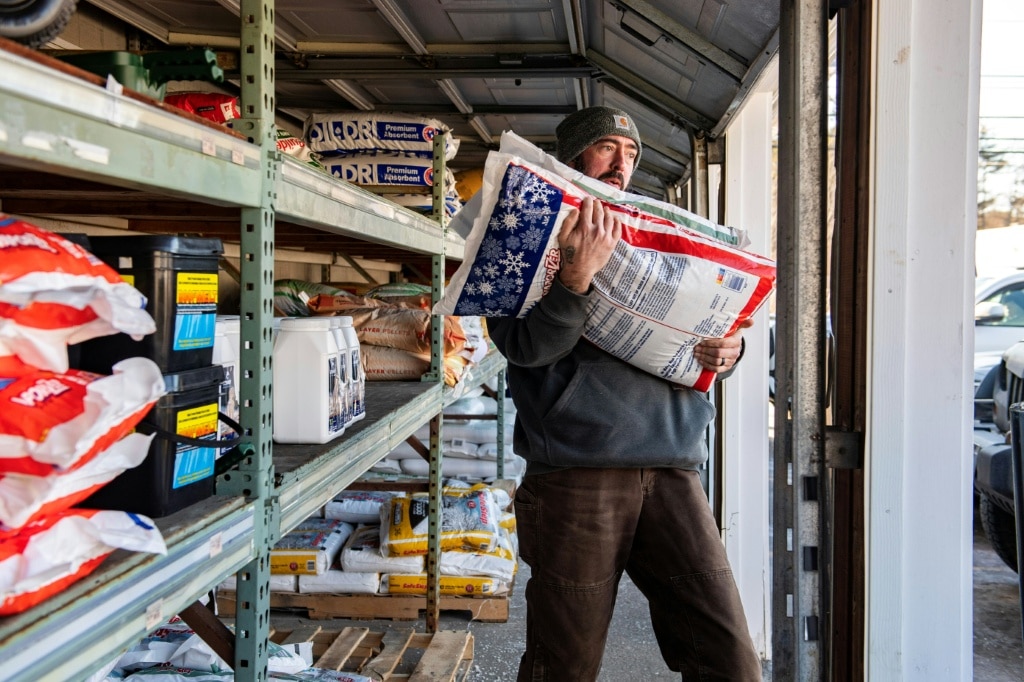
In anticipation of the storm’s fury, which the National Weather Service (NWS) warned could produce ‘catastrophic’ ice accumulations, consumers engaged in frantic stockpiling, emptying supermarket shelves. Transportation Secretary Sean Duffy indicated that a staggering 240 million individuals could feel the storm’s impact, prompting at least 16 states and Washington D.C. to preemptively declare states of emergency.
The travel sector experienced immediate disruption, with over 3,400 U.S. flights canceled and an additional 1,100 delayed on Saturday alone, according to data from FlightAware. Southern metropolises like Dallas saw temperatures plunge to 21°F (-6°C) amid freezing rain. Houston Mayor John Whitmire urgently advised the city’s residents to secure themselves in place for the next 72 hours, with warming centers being activated to assist those in need.
Officials in Texas sought to provide assurances that the state’s power grid was substantially more resilient than during the catastrophic failure five years prior, which had left millions without electricity in deadly conditions. The storm has already deposited up to six inches (15 cm) of snow in parts of Oklahoma and Arkansas.
Meteorologists project the system will subsequently batter the densely populated mid-Atlantic and northeastern regions before a lingering frigid air mass sets in. The NWS cautioned that icy surfaces from snow and sleet will present persistently dangerous travel conditions well into the following week. Consequently, the federal government announced the preemptive closure of its offices on Monday.
The scientific community attributes the storm’s intensity to a distorted polar vortex—a vast area of cold, low-pressure air in the Arctic. This system, which typically remains compact, has stretched and sent Arctic air spilling into North America. While a growing body of research suggests climate change may be increasing the frequency of such polar vortex disruptions, the phenomenon remains a subject of ongoing scientific debate, intertwined with natural climate variability.
Amid the crisis, political figures responded differently. New York Governor Kathy Hochul warned that mere minutes outdoors could pose serious health risks, urging citizens to protect property and check on vulnerable neighbors. Conversely, former President Donald Trump, from Washington, used the event to question the reality of global warming on his social media platform.
Authorities issued grave warnings about life-threatening wind chills, potentially diving below -50°F (-45°C) in the Northern Plains and Upper Midwest, where frostbite can occur within minutes. The severe conditions have also forced the rescheduling of numerous professional and collegiate sporting events.