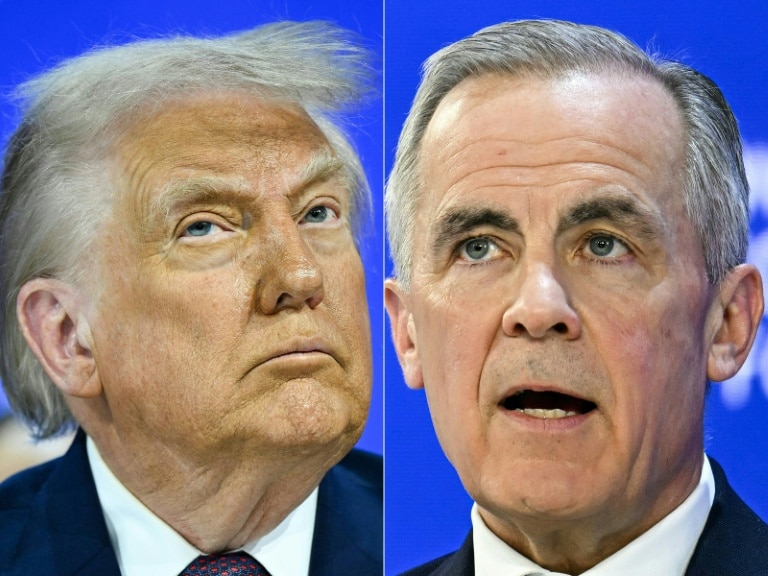
In a significant escalation of North American trade tensions, former US President Donald Trump has issued a stark warning to Canada regarding its potential trade agreement with China. Should Prime Minister Mark Carney finalize the proposed trade deal with Beijing, Trump has pledged to impose comprehensive 100% tariffs on all Canadian goods entering the United States.
The diplomatic relationship between the neighboring nations has deteriorated substantially since Trump’s return to the White House in January 2025. The current friction stems from Carney’s recent visit to China, where he announced a preliminary trade agreement aimed at reducing tariffs between Ottawa and Beijing. Trump responded vehemently on his Truth Social platform, asserting that Canada would become a ‘Drop Off Port’ for Chinese products destined for American markets if the agreement proceeds.
Trump’s rhetoric intensified with dramatic claims that China would ‘completely devour’ Canada, potentially destroying its business sector, social fabric, and way of life. This exchange represents the latest development in an ongoing war of words between the two leaders that began at the World Economic Forum in Davos. There, Carney received a standing ovation for his critique of the ‘rupture’ in the US-led global order—a remark widely interpreted as targeting Trump’s unconventional foreign policy approach.
The confrontation has extended beyond trade matters, with Trump rescinding Carney’s invitation to participate in his proposed ‘Board of Peace’—an initiative initially conceived to address postwar Gaza but now apparently expanding into a broader international conflict resolution body that some observers view as a potential rival to the United Nations.
Despite the heated rhetoric, Canada maintains substantial economic dependence on its southern neighbor, with over 75% of Canadian exports destined for US markets. While previous Trump tariffs affected key Canadian industries including automotive, aluminum, and steel sectors, the existing North American free trade framework has somewhat mitigated the economic impact. With negotiations to revise this agreement scheduled for this year, Trump’s repeated assertions that the United States doesn’t require access to Canadian products suggest potentially sweeping consequences for Canada’s economy.
The situation remains particularly volatile given Trump’s additional threats of Canadian annexation, recently symbolized by a social media post depicting Canada, Greenland, and Venezuela under the American flag. This developing diplomatic crisis unfolds as both nations, along with Mexico, prepare to co-host the upcoming World Cup.