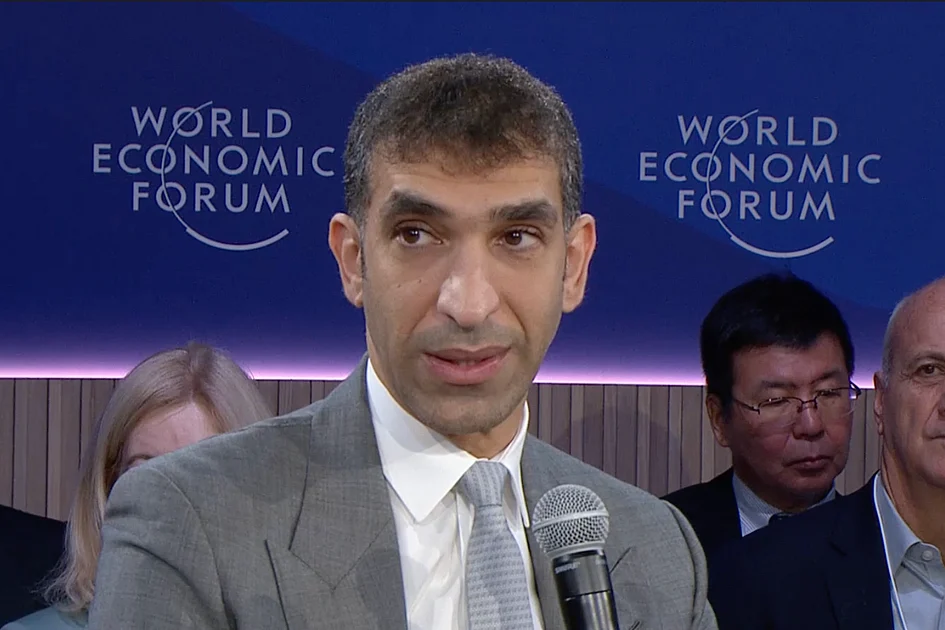
The United Arab Emirates is undergoing a significant technological transformation as it confronts mounting challenges in attracting young workers to low-skilled positions. During a panel discussion at the World Economic Forum in Davos, UAE Minister of Foreign Trade Dr. Thani Al Zeyoudi revealed the nation’s strategic pivot toward robotics and artificial intelligence to address critical labor shortages in construction and manufacturing sectors.
Minister Al Zeyoudi emphasized that the UAE’s heavy reliance on aging non-skilled labor, particularly in construction, has necessitated this technological shift. “Robotics is the main solution,” he stated, noting that young workers increasingly avoid traditional blue-collar roles despite the nation’s welcoming stance toward international talent.
The technological transformation represents a fundamental reimagining of the UAE’s economic framework. Both public and private sectors are deploying advanced technologies to achieve faster, more efficient operations while reducing dependence on imported labor. The government began signaling this transition eight years ago, urging manufacturers to embrace technology that could replace large volumes of manpower.
This shift extends beyond mere labor substitution. The UAE is making substantial investments in robotics factories to support its massive development projects, while simultaneously pursuing a broader transition toward a knowledge-based economy. The nation’s investment in research and development has emerged as a crucial factor in this transformation.
Practical applications are already demonstrating remarkable results. In the oil and gas sector, AI now determines production decisions, eliminating the need for simulation engineers to identify drilling locations. Robotics enable continuous operations during what were previously lengthy shutdown periods. “The sites where we used to have a shutdown for three to six months, now with robotics, we’re applying it while doing the operation,” Minister Al Zeyoudi explained. “The robot does surveillance, provides situational awareness, and operations resume within days.”
The UAE has adopted a comprehensive approach encompassing government appointments, policy development, and capacity building to support this technological evolution. Minister Al Zeyoudi stressed the urgency of this transformation: “When it comes to AI, digitalization, and technology, it is too late to wait for someone else to do it, because you’re going to be out of the game.”
Despite this progress, challenges remain in attracting foreign investment, particularly regarding energy supply for manufacturing facilities, land availability and ownership, logistics, and connectivity. These hurdles represent the next frontier in the UAE’s ongoing economic modernization efforts.