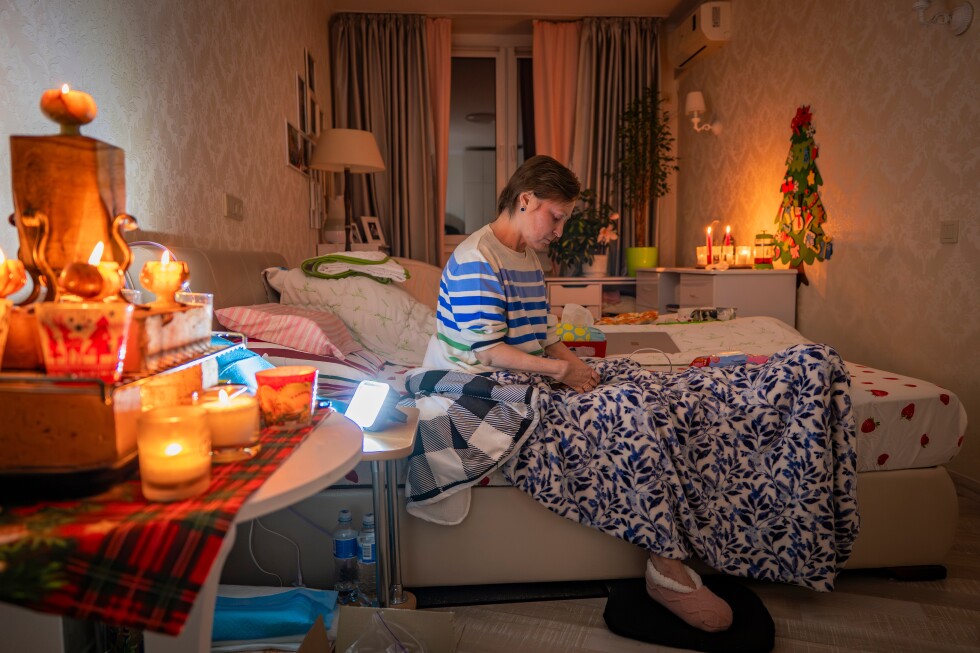
In the frozen heart of Ukraine’s capital, a profound humanitarian crisis unfolds within the concrete walls of Soviet-era high-rises. Olena Janchuk, a 53-year-old former kindergarten teacher afflicted with severe rheumatoid arthritis, remains imprisoned on the 19th floor of her Kyiv apartment block—650 steps from the ground. This constitutes her fourth winter of war, a season defined by perpetual cold and darkness resulting from Russia’s systematic bombardment of Ukraine’s energy infrastructure.
With daily blackouts lasting up to seventeen hours, elevators have transformed into inaccessible luxuries. January temperatures plunging to -10°C (14°F) leave permanent frost patterns creeping across interior windows. Residents like Janchuk employ desperate ingenuity for survival: makeshift fireplaces constructed from candles beneath heat-absorbing bricks, USB-powered lamps illuminating darkened rooms, and meticulous rationing of precious power bank reserves for electric blankets during the coldest nights.
Kyiv’s three million residents now organize their existence around electricity schedules, planning cooking, charging, and washing routines within narrow windows of availability. The urban landscape has adapted—diesel generators rumble along commercial streets, shoppers navigate aisles by phone flashlight, and bars glow with candlelight. Mobile applications deliver critical notifications about narrowing electricity windows, while Telegram chats facilitate neighborly check-ins and blackout updates.
The architecture itself has become an instrument of isolation. Staircases present insurmountable barriers for elderly residents, people with disabilities, and wounded veterans, effectively trapping them within their homes. While affluent neighborhoods pool resources for building generators, most residential blocks housing pensioners and vulnerable populations cannot afford such solutions. Disability advocates urgently petition city officials for generator funding, arguing that staircases have created an invisible social barrier.
The scale of destruction is catastrophic. Energy sector damage exceeds $20 billion according to World Bank, European Commission, and UN estimates. Shift supervisor Yuriy (name withheld for security) surveys the wreckage of a repeatedly struck coal-fired power plant—charred machinery, collapsed roofs, and control panels melted into uselessness. Repairs proceed by torchlight behind giant sandbag barriers, with photographs of deceased colleagues hanging near entrances.
Despite Kyiv’s implementation of austere power-saving measures—dimming streetlights and investing in decentralized generation—restoration feels distant for those enduring winter in darkness. As 72-year-old Lyudmila Bachurina summarizes while managing household chores during brief power intervals: ‘I’m tired, really tired. When you can’t go outside, when you don’t see the sun… it wears you down. But we will endure anything until the war ends.’ Across the snow-covered city, the nighttime horizon continues to flash with explosions as Russia persists in its campaign against Ukraine’s energy resilience.