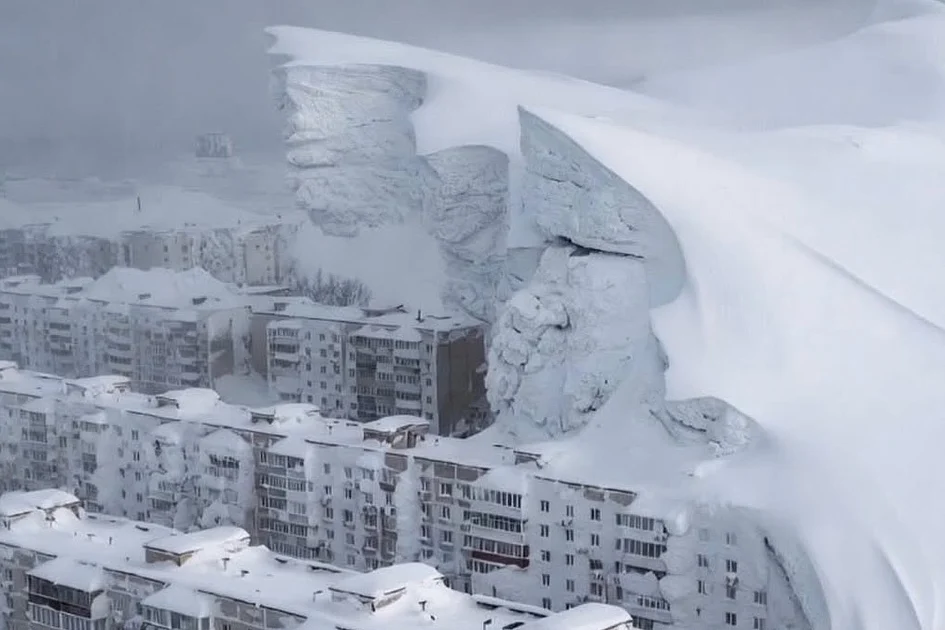
Russia’s Kamchatka Peninsula has been gripped by the most severe snowfall event in six decades, creating conditions so extreme that they’ve sparked both genuine concern and digital deception. While authentic footage shows vehicles completely submerged and residents tunneling through massive drifts to access their homes, a parallel narrative of fantastical winter scenes has emerged across social media platforms.
The legitimate crisis saw the port city of Petropavlovsk-Kamchatsky transformed into an arctic landscape, with snowbanks reaching traffic light height and four-wheel drive vehicles immobilized by the unprecedented accumulation. Reuters-confirmed footage documents the real struggles of Kamchatka’s residents as they employ heavy equipment to clear roads and pathways buried under meters of snow.
Simultaneously, sophisticated AI-generated content has proliferated online, depicting physically impossible scenarios including residents skiing down vertiginous snow mountains from apartment windows and architectural structures arched by snow in wave-like formations. Weather experts from AccuWeather have identified telltale signs of digital fabrication, noting how the snow in these videos defies physical laws of movement and compression, while the architecture shown contradicts the actual low-rise building profile of affected towns.
The meteorological phenomenon behind the actual storm involves complex arctic air patterns simultaneously affecting Eastern Russia and Asia, with secondary systems impacting Eastern Europe. While the region genuinely experienced disruptive conditions that extended to flight cancellations in China and Japan, the most viral content represents algorithmic fantasy rather than documented reality.
This incident highlights growing concerns about artificial intelligence’s capacity to mimic reality with increasing accuracy, suggesting that critical media literacy and fact-checking must become standard practice when encountering extraordinary visual content online.