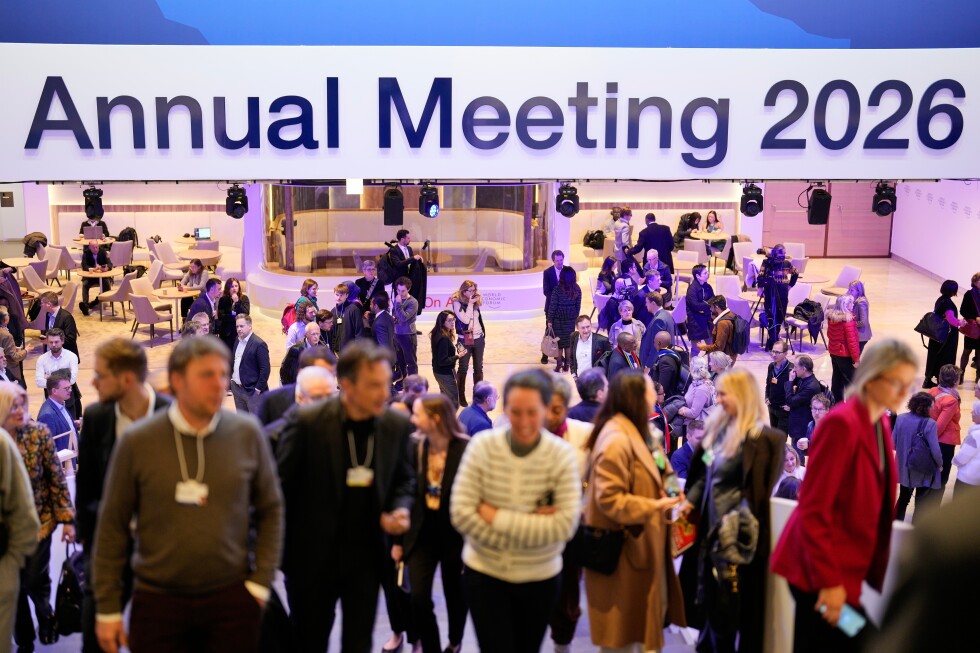
DAVOS, Switzerland — The 2020 World Economic Forum witnessed a striking dichotomy as U.S. President Donald Trump’s geopolitical theater eclipsed substantive discussions on artificial intelligence and climate initiatives that traditionally dominate the annual gathering of global elites. During his whirlwind 24-hour appearance in the Swiss Alps, Trump commanded unprecedented attention through a combination of provocative policy announcements and diplomatic reversals that reshaped the forum’s narrative landscape.
The presidential presence created what observers termed ‘two parallel conferences’: one focused on technological innovation where business leaders like Elon Musk and Nvidia’s Jensen Huang discussed AI infrastructure and employment impacts, and another dominated entirely by Trump’s geopolitical maneuvers. This division was notably articulated by former Congresswoman Jane Harman, who observed the forum’s unusual bifurcation between technological and political discourses.
Trump’s agenda included the abrupt announcement of tariffs against eight European nations opposing his Greenland acquisition attempt—a move he dramatically reversed within days following international criticism. Simultaneously, he launched the controversial ‘Board of Peace’ initiative for Middle East conflict resolution, drawing mixed reactions from global leaders. While NATO’s Mark Rutte and Ukraine’s Volodymyr Zelenskyy praised Trump’s engagement with Eastern European security concerns, European allies expressed skepticism about the proposed alternative to UN frameworks.
Amid the political spectacle, technological discussions advanced with cautious optimism. AI executives emphasized the technology’s potential to create infrastructure jobs rather than eliminate employment, while addressing concerns about energy consumption and U.S.-China trade tensions. The forum concluded with BlackRock’s Larry Fink invoking Elon Musk’s optimistic perspective, underscoring the business community’s preference for hopeful engagement over pessimistic forecasting despite the prevailing political turbulence.