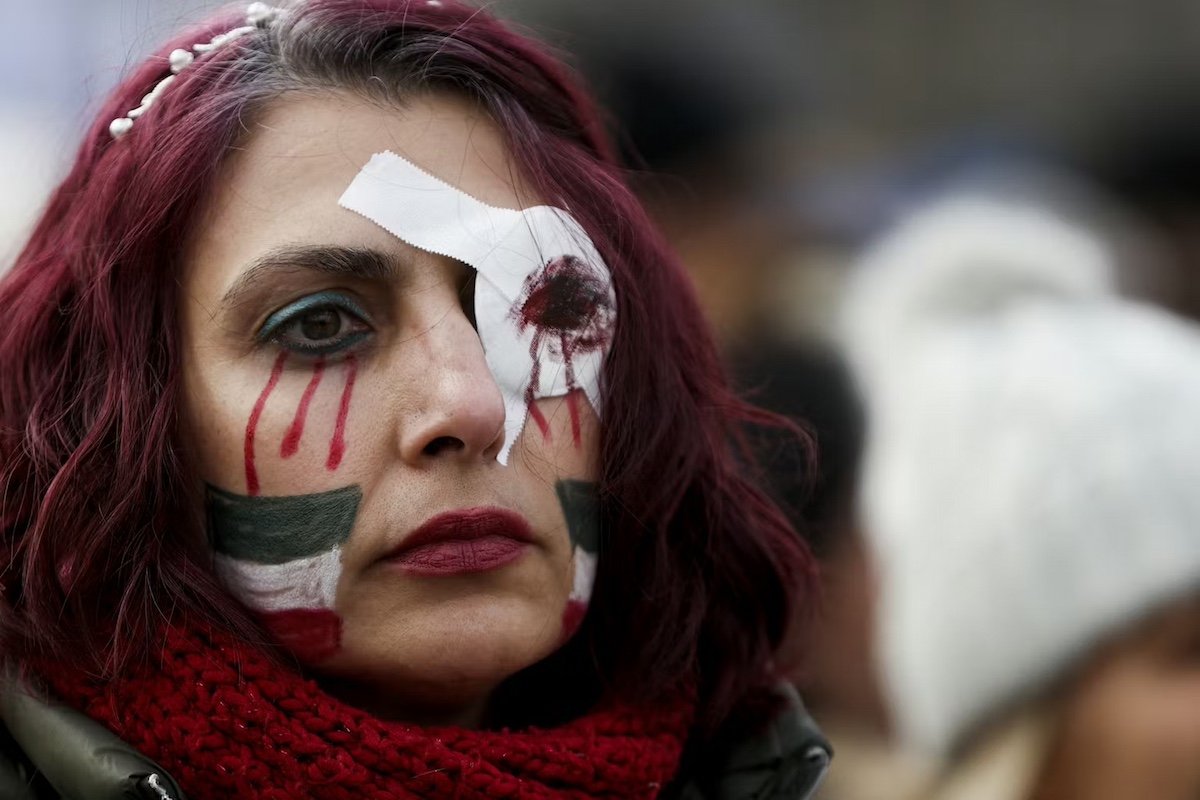
Iranian security forces are employing a disturbing tactic of deliberately targeting protesters’ eyes with projectiles and buckshot, according to extensive evidence and historical analysis. This systematic approach to ocular violence represents more than mere police brutality—it constitutes a calculated political strategy rooted in ancient Persian power dynamics.
Recent protests, including the nationwide Women, Life, Freedom movement in 2022 and demonstrations in late 2025, have seen an alarming frequency of eye injuries. Nobel laureate Shirin Ebadi reported on January 9 that at least 400 people were hospitalized in Tehran alone with firearm-related eye injuries since the beginning of the year’s protests. The victims predominantly include women, youth, students, and even bystanders.
This practice finds disturbing parallels in Iran’s political history. Ancient Persian culture historically linked vision with power—”I see, therefore I govern”—making blindness synonymous with political disqualification. The Shahnameh (Book of Kings) from the 10th century depicts blinding as narrative marker of political decline, while historical records show Persian rulers like Abbas the Great (1588-1629) and Nader Shah (1736-1747) routinely blinded relatives perceived as political threats.
The contemporary Islamic Republic continues this symbolic violence through modern means. While authorities deny systematic blinding, the widespread use of so-called “non-lethal” weapons against demonstrators’ eyes serves similar political purposes: neutralizing dissent without killing, preventing documentation of protests, and eliminating the independent gaze that challenges official narratives.
Women particularly face targeted ocular violence, as their liberated gaze represents a fundamental threat to the regime’s ideological control. The mutilated faces of injured protesters have become powerful symbols of resistance, transforming victims into living evidence of state brutality despite government attempts to conceal violence through internet blackouts.
This systematic blinding campaign reveals Iran’s profound democratic legitimacy crisis, demonstrating how ancient techniques of political neutralization persist in modern repression tactics. The destroyed eyesight of protesters represents both the regime’s brutality and the resilience of those who continue to challenge its authority.