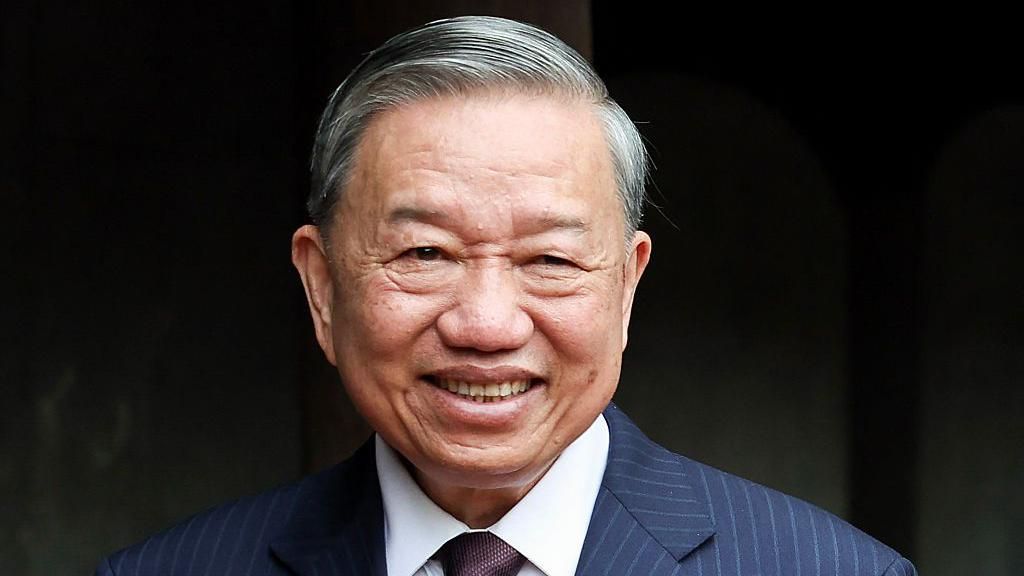
Vietnam’s Communist Party has formally elected To Lam as its General Secretary, securing his leadership for a five-year term following his initial appointment in August 2024 after the passing of long-serving leader Nguyen Phu Trong. The 68-year-old leader now faces the formidable task of steering Vietnam toward developed economy status while navigating complex geopolitical tensions and domestic challenges.
Lam’s vision centers on breaking Vietnam free from the ‘middle income’ trap through sweeping administrative and economic reforms. During his April address commemorating the 50th anniversary of Liberation Day (marking the end of the Vietnam War), he invoked the spirit of Vietnam’s 1975 victory and the economic transformation achieved through the Đổi Mới reforms initiated in 1986. These reforms previously propelled Vietnam from one of the world’s poorest nations to its current status as a manufacturing powerhouse.
The new leader’s ambitious agenda requires maintaining Vietnam’s impressive 6.5% average annual economic growth rate, which would potentially triple per capita income within two decades. However, significant obstacles loom: heavy reliance on foreign-owned industry, potential crippling tariffs from ongoing trade tensions with the United States, and the delicate geopolitical balancing act between Washington and Beijing.
Lam brings to the position a extensive background in security apparatus, having spent over four decades in the People’s Public Security Forces. He has been a major architect of the ongoing ‘blazing furnace’ anti-corruption campaign initiated by his predecessor, which has disciplined tens of thousands of officials and resulted in high-profile prosecutions including the case of Truong My Lan, sentenced to death for financial crimes totaling $44 billion. The campaign has improved Vietnam’s standing in Transparency International’s corruption perceptions index, rising from 113th in 2016 to 88th in 2024.
Concurrently, Lam has pursued bureaucratic streamlining, eliminating approximately 100,000 civil service positions, reducing provincial divisions, and consolidating government ministries. While these measures demonstrate reformist ambitions, critics caution that the anti-corruption drive’s zealous implementation may be creating additional bureaucratic complications.
Lam’s tenure has not been without controversy. His security background has translated into continued repression of civil liberties, with Reporters Without Borders documenting over 70 journalists imprisoned since 2016, 38 of whom remain incarcerated. Vietnam consistently ranks among the world’s worst countries for press freedom. A particularly notable incident involved the 2021 imprisonment of a noodle vendor for parodying Salt Bae after Lam himself was filmed eating a $20,000 gold-flecked steak prepared by the celebrity chef.
In foreign policy, Lam must navigate increasingly complex relations with both China and the United States while pursuing technological advancement. He has championed ‘high-quality’ growth through technological development, quadrupling science-and-technology funding and targeting $100 billion annually from the semiconductor sector by 2050.
Analysts characterize Lam’s leadership style as pragmatic rather than ideological, prioritizing economic development and political stability. While maintaining continuity with previous administration priorities, his actions suggest a potentially bolder, more assertive approach to governing as Vietnam seeks to transform itself into a high-income economy within a generation.