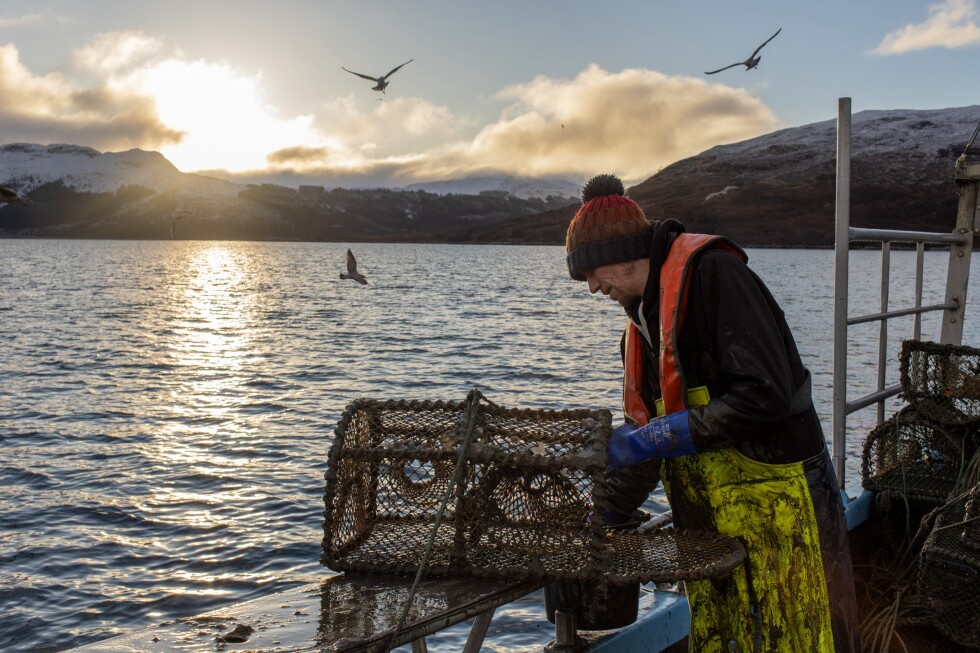
OFF THE COAST OF KYLEAKIN, Scotland — Beneath the surface of Scotland’s protected waters, a silent ecological crisis unfolds as industrial fishing methods continue to operate with minimal restrictions. Veteran fisherman Bally Philp, with over thirty years of experience, witnesses this degradation firsthand from his creel boat in Loch Alsh—one of the few remaining sanctuaries along Scotland’s coastline.
Despite 37% of Scottish waters carrying marine protected area (MPA) designations, environmental organizations reveal that less than 5% have implemented management measures to enforce these protections. Consequently, destructive practices including bottom trawling and scallop dredging—methods that rake and devastate seabed ecosystems—are permitted across approximately 95% of Scotland’s coastal waters, including within designated conservation zones.
The ecological cost of these practices is staggering. Bottom trawling vessels consume nearly triple the fuel of conventional fishing methods while crushing marine habitats and releasing stored carbon from disturbed seabed sediments. The method results in substantial bycatch discard with minimal survival rates for unintended marine life.
Philp’s personal journey mirrors the industry’s transformation. Having worked on trawlers in the late 1980s, he witnessed the devastating practice of discarding dead bycatch—”a heartbreaking stream of dead fish flowing off the back of the boat.” This experience prompted his shift to sustainable creel fishing, which minimizes habitat damage and allows most unintended catch to survive release.
The problem extends beyond Scotland. A 2024 report by the Marine Conservation Society and Oceana documented 4.4 million hours of bottom trawling within protected marine sites across seven European nations between 2015-2023. The repeal of Scotland’s historic 3-mile coastal trawling ban in 1984 precipitated catastrophic declines, with areas like the Clyde experiencing commercial fishery collapse.
The economic implications are equally significant. A 2023 analysis projected that banning bottom trawling in UK offshore protected areas could yield net benefits reaching £3.5 billion ($4.7 billion) over two decades through enhanced carbon storage, pollution removal, and ecosystem services.
Marine biologist Caitlin Turner explains the cascading ecological effects: “Degraded habitats provide fewer spawning grounds for juvenile fish, ultimately reducing abundance throughout the food chain—affecting larger predators that depend on these prey species.”
The Scottish government has delayed crucial fisheries management consultations until at least mid-2026, citing parliamentary elections and contractor delays. While officials note that 13% of inshore protected areas currently restrict certain destructive practices, conservationists advocate for reinstating coastal protections covering至少 30% of Scotland’s inshore seas—aligning with international 2030 conservation targets.
For Philp, who represents the third generation of fishers in his family, the timeline for action feels desperately slow. He has discouraged his own sons from continuing the family tradition, stating: “We’re at the arse end of something that was once really good. Unless we can turn that around, why would anyone want their kids to do this?”