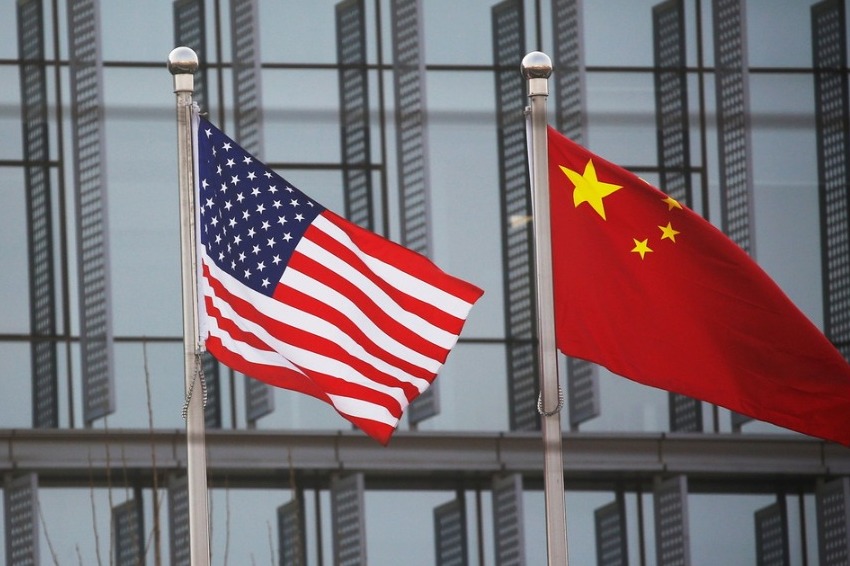
DAVOS, Switzerland – Leading international relations experts assembled at the World Economic Forum on Wednesday identified a significant pragmatic shift in U.S.-China relations, with both global powers increasingly prioritizing practical risk management over ideological confrontation.
During a panel titled “US and China: Where Will They Land?” prominent scholars and diplomats highlighted how recent economic tensions have driven both nations toward establishing stronger communication channels and crisis guardrails. This development follows a period of escalated trade tensions that saw the U.S. implement substantial tariffs on Chinese goods, prompting retaliatory measures from Beijing before both parties reached a temporary truce through five rounds of high-level negotiations.
Harvard University’s Graham Allison, who originated the concept of the “Thucydides Trap” describing how rising powers can trigger conflict with established ones, cautioned against interpreting current easing tensions as a permanent resolution. “A landing point, as if we had a permanent place to land, is not likely,” Allison stated, noting that the relationship has evolved into one of “mutual deterrence” where both recognize their capacity to inflict significant harm on each other.
Australian Ambassador to the U.S. Kevin Rudd emphasized that the central challenge lies not in seeking a final endpoint but in constructing practical mechanisms to manage strategic competition while minimizing risks of crisis, conflict, and war. He identified three critical flashpoints that will determine the global order: tariffs, technology, and Taiwan.
University of Southern California law professor Angela Huyue Zhang expressed measured optimism for 2026, citing three stabilizing factors: Washington’s recognition that containment strategies have inadvertently accelerated China’s technological advancement, both nations’ identification of mutual vulnerabilities during last year’s trade war, and neither side having appetite for further instability.
U.S. Senator Christopher Coons noted bipartisan support for “clear-eyed engagement” with China while acknowledging serious security tensions, particularly regarding artificial intelligence. He highlighted the pressing need for improved military communication channels to reduce misunderstanding risks.
Chinese scholar Zhao Hai from the Chinese Academy of Social Sciences challenged the prevailing “tech war” narrative, arguing that AI represents a shared challenge requiring bilateral regulation rather than containment. He advocated for formal, multilevel mechanisms to regulate U.S.-China ties, emphasizing that continuous dialogue between leaders remains crucial for maintaining bilateral stability.