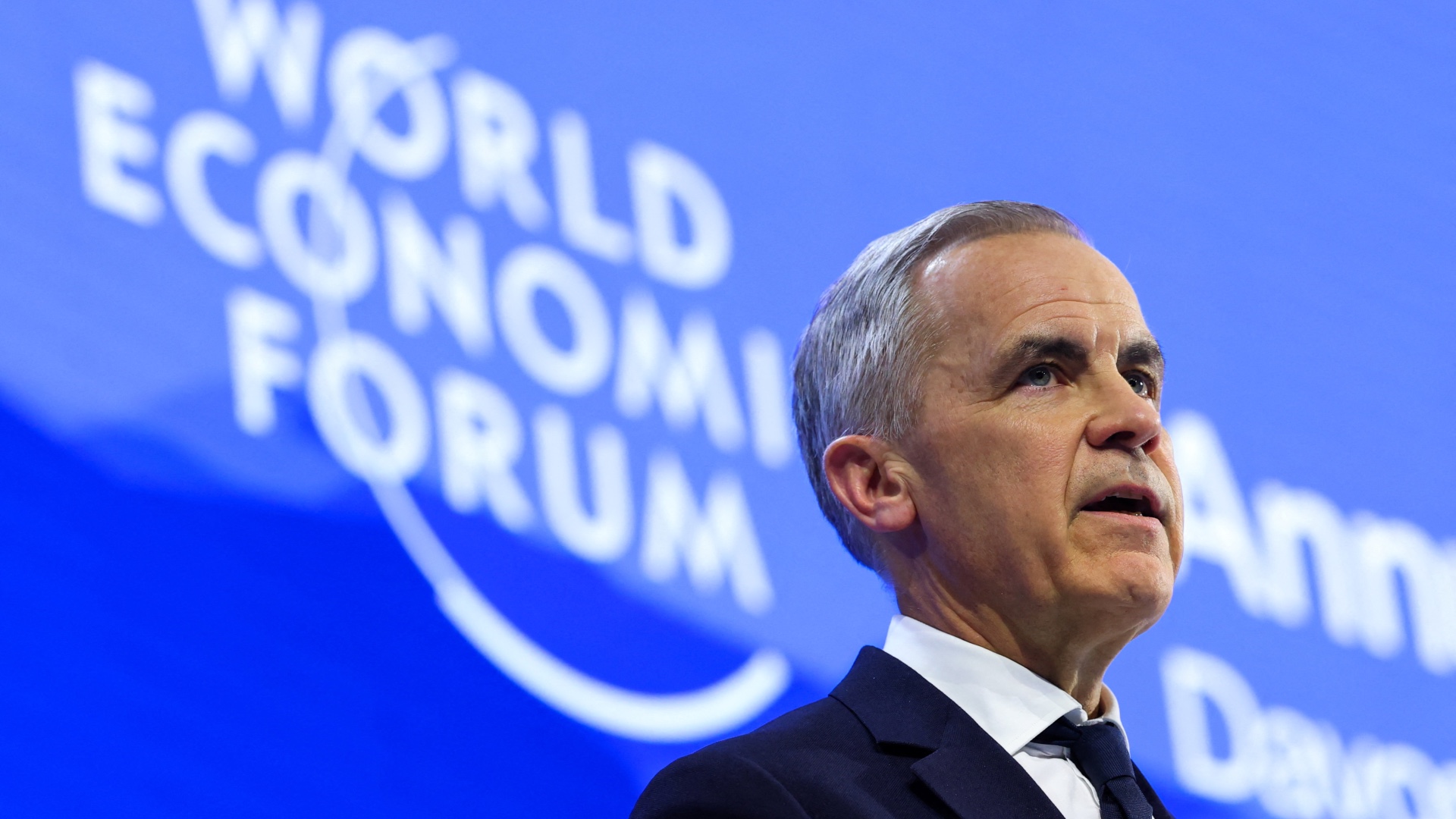
In a groundbreaking address at the World Economic Forum in Davos, Canadian Prime Minister Mark Carney delivered what analysts are calling the most consequential speech by a Canadian leader in generations. The former central banker, who entered politics just months ago, delivered a stunning indictment of the Western-led liberal international order, declaring it no longer functional in an era dominated by Trump-era unilateralism.
Carney articulated that Canada and similar ‘middle powers’ must forge an independent path forward, acknowledging that the rules-based system had always contained fundamental flaws. ‘For decades, we knew the story was partially false,’ Carney told assembled global leaders. ‘The strongest would exempt themselves when convenient, trade rules were enforced asymmetrically, and international law applied with varied rigour. We participated in the rituals while avoiding calling out the gaps between rhetoric and reality. This bargain no longer works.’
The speech came amid escalating tensions with the United States, where President Trump has imposed 35% tariffs on Canadian imports outside the USMCA framework and repeatedly threatened to make Canada ‘the 51st state.’ Trump directly targeted Carney in his own Davos remarks, stating Canada ‘gets a lot of freebies from us’ and should be ‘grateful’ for American protection.
Carney, drawing on his financial expertise, warned that multiple crises over two decades have exposed the dangers of ‘extreme global integration’ where economic tools become weapons. ‘When integration becomes the source of your subordination, and rules no longer protect you, you must protect yourself,’ he declared, characterizing the current moment as ‘a rupture, not a transition.’
The Canadian leader’s comments followed strategic visits to China and Qatar, resulting in tangible agreements on trade and investment that signal Ottawa’s diversification efforts. However, analysts questioned the viability of Carney’s middle-power coalition concept, noting the divergent interests of potential partners from Brasilia to Tokyo.
The speech resonated strongly with both international observers and Canadian citizens, who applauded their prime minister’s bold stance while recognizing the delicate balancing act required with their powerful southern neighbor amid deteriorating bilateral relations.