The United Arab Emirates is transforming weather modification science through cutting-edge radar technology and artificial intelligence, moving beyond traditional cloud seeding methods to achieve unprecedented precision in rainfall enhancement. Spearheaded by Dr. Dixon Michael, a prominent atmospheric scientist working with the UAE’s Rain Enhancement Programme (UAEREP), this innovative approach utilizes dual-polarization radar systems capable of identifying specific particles within storms—including hail, snow, ice, and even insects—rather than merely measuring precipitation intensity.
The research addresses a fundamental challenge in weather modification: determining whether cloud seeding operations actually produce measurable results. Traditional methods relied on radar reflectivity to estimate storm strength but provided limited insight into internal cloud microphysics. “It doesn’t tell you a lot about what’s going on inside the storm,” Dr. Michael noted during the announcement of the sixth cycle awardees of UAEREP. “It doesn’t give you clues about the microphysics.”
The upgraded system integrates advanced dual-polarization radar with AI algorithms to analyze storm composition in real-time, enabling operators to distinguish between various hydrometeors (particles of water or ice in the atmosphere). This technological advancement represents a significant upgrade to the long-standing LROSE/TITAN storm tracking system, which has been utilized globally for over three decades.
A critical component of this initiative involves developing local expertise at the National Center of Meteorology (NCM), creating what Dr. Michael describes as “a pipeline of qualified personnel who can operate this system into the future.” This capacity-building ensures the sustainability of the UAE’s investment in water security technologies.
Unlike historical randomized experiments where scientists would “flip a coin and seed half the storms” for comparison, the UAE’s operational program requires more sophisticated evaluation methods. AI now enables researchers to analyze massive datasets to detect patterns indicating successful seeding operations—whether a storm persisted longer, expanded further, or generated more precipitation following intervention.
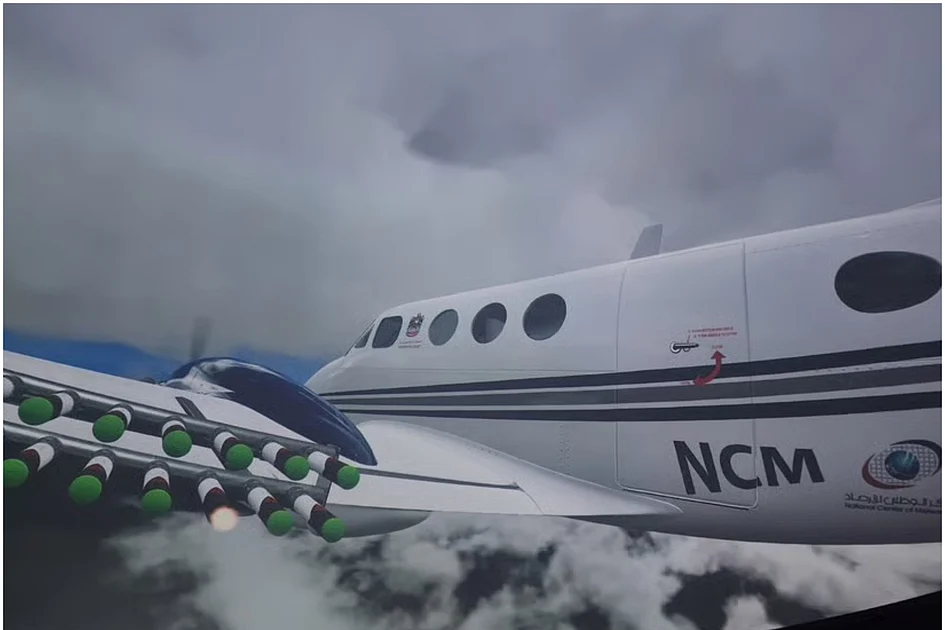
The integration of real-time aircraft telemetry with advanced modeling establishes the UAE as possessing one of the world’s most sophisticated cloud seeding infrastructures. This comprehensive approach transforms each storm into a data-rich experiment in sustainability, ultimately working toward ensuring water security for future generations in the region.