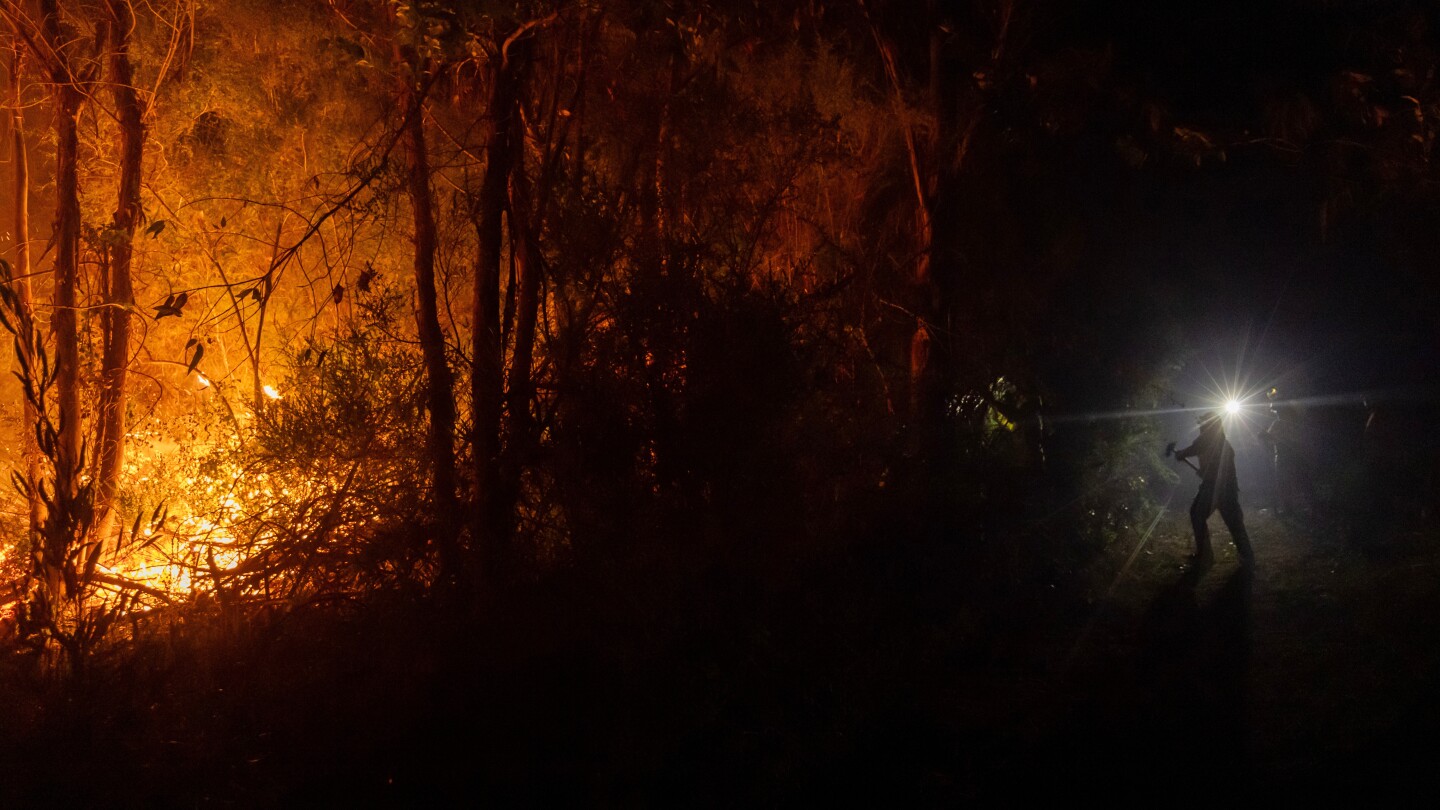
Chile faces one of its most devastating wildfire emergencies in recent history, with central and southern regions experiencing unprecedented destruction. The blazes, which ignited in mid-January in Biobio and Nuble regions approximately 500 kilometers south of Santiago, have claimed at least 20 lives and displaced over 50,000 residents. The government has declared a state of catastrophe, enabling military coordination in firefighting operations.
Fire scientists identify a dangerous convergence of factors driving the catastrophe: extreme heat, prolonged drought exceeding a decade, erratic winds, and human-shaped landscapes. Miguel Castillo, Director of the Forest Fire Engineering Laboratory at the University of Chile, notes that while fire numbers remain within normal ranges, the burned area has nearly tripled—indicating fewer ignitions are causing exponentially greater damage.
The crisis exhibits characteristics increasingly common in global extreme wildfire seasons. Virginia Iglesias, Director of Earth Lab at University of Colorado Boulder, describes the emergency as involving multiple simultaneous fires advancing toward communities. Mark Cochrane, fire ecologist at University of Maryland’s Center for Environmental Science, explains how drought transforms vegetation into abundant fuel, while winds oxygenate fires and accelerate combustion.
Industrial plantations covering vast areas of central and southern Chile significantly exacerbate fire behavior. Pine and eucalyptus plantations feature high fuel loads, continuous tree coverage, and vertical “ladder” structures that enable flames to reach crown levels. These non-native species are highly flammable and generate wind-blown embers that ignite new fires behind containment lines, creating insurmountable challenges for firefighters in steep terrain.
Nearly all Chilean wildfires originate from human activity—whether intentional or negligent—with ignitions occurring through power lines, recreation, and infrastructure. The environmental impacts extend beyond immediate destruction: smoke degrades air quality across regions, post-fire soils become water-repellent increasing flood risks, and intense burns facilitate invasive species regeneration that perpetuates fire cycles.
Researchers emphasize that climate projections indicate these conditions will intensify. Alejandro Miranda of Chile’s Center for Climate and Resilience Research notes that recent extreme fire seasons coincide with record temperatures and rainfall deficits exceeding 30% below historical averages.
Looking forward, experts stress that while firefighting remains crucial, prevention strategies must prioritize reducing ignitions, managing fuels, addressing climate change, and implementing community redesign with defensible spaces around homes.