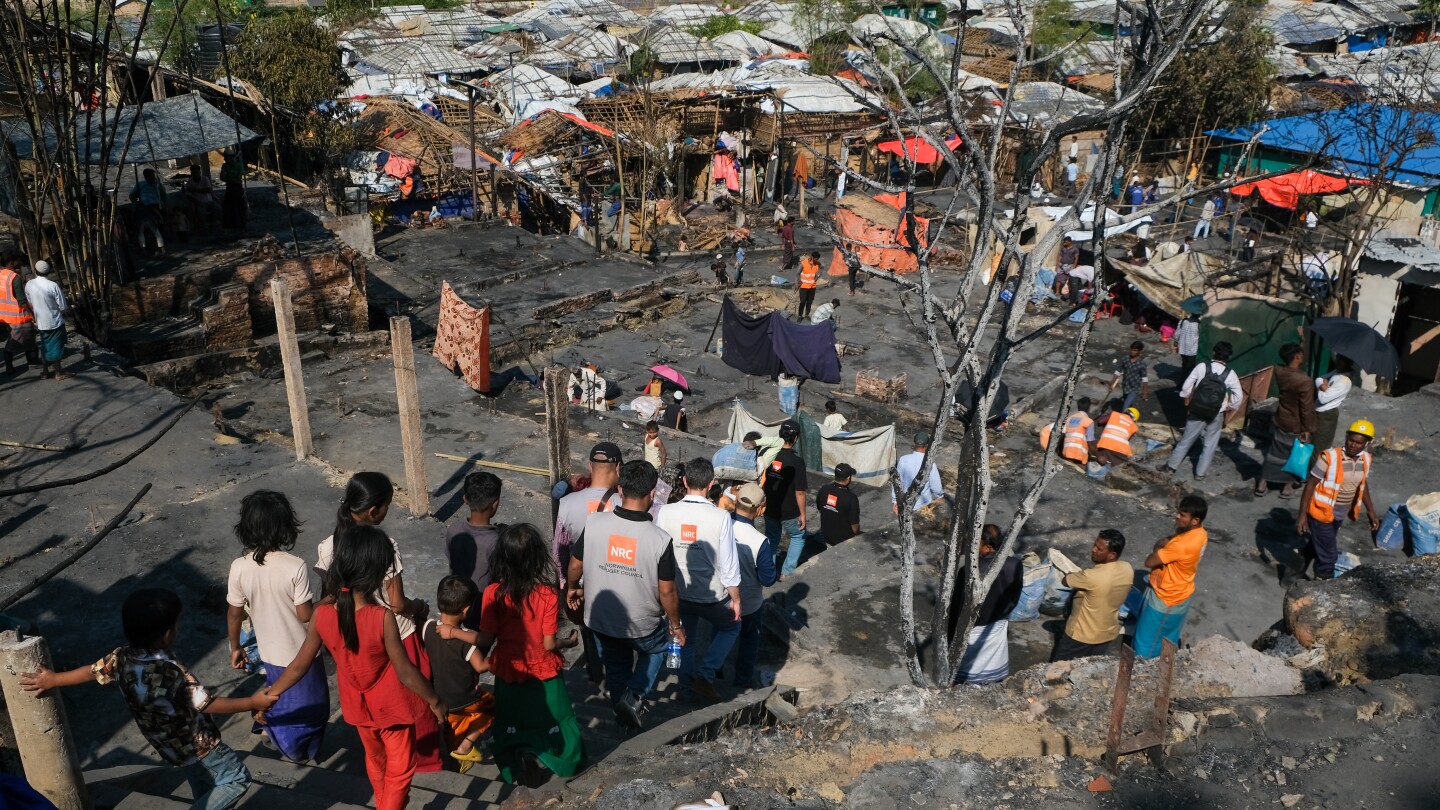
A devastating inferno has swept through a Rohingya refugee settlement in Cox’s Bazar, Bangladesh, reducing hundreds of shelters to ashes and displacing over 2,000 vulnerable individuals. The blaze erupted in the pre-dawn hours of Tuesday within Camp 16, part of the world’s largest refugee complex housing more than one million Rohingya who fled persecution in Myanmar.
The conflagration, which required approximately three hours for firefighters to contain, consumed 335 makeshift dwellings and damaged an additional 72 structures. Critical infrastructure including water sanitation points, educational facilities, and access pathways suffered significant impairment. While miraculously resulting in no fatalities and only minor injuries, the disaster obliterated refugees’ essential possessions, including crucial identification documents.
International relief organizations including the International Organization for Migration and Norwegian Refugee Council have mobilized emergency response efforts, distributing vital supplies including thermal blankets, mosquito nets, cooking equipment, hygiene kits, and solar-powered lighting. Lance Bonneau, IOM’s Chief of Mission in Bangladesh, emphasized that such catastrophes extend beyond physical damage, creating immediate protection risks and compounding existing vulnerabilities.
The tragedy underscores the persistent fire hazards inherent in the overcrowded camp conditions, where temporary bamboo structures covered with flammable materials stand in dangerously close proximity. According to documentation, between May 2018 and December 2025, these camps experienced 2,425 separate fire incidents affecting over 100,000 residents and destroying more than 20,000 shelters.
This disaster occurs against the backdrop of severe funding shortages for humanitarian operations. Critical plans to construct 50,000 semi-permanent shelters—intended to replace the highly combustible temporary structures—were suspended following international aid reductions announced in January 2025. The funding crisis stems from sweeping cuts to global humanitarian assistance, including a 90% reduction in USAID foreign aid contracts and decreased contributions from European nations.
The Rohingya refugee crisis originated in 2017 when Myanmar’s military initiated a brutal crackdown following insurgent attacks in Rakhine state, prompting over 700,000 Rohingya to flee across the border. The military operation prompted accusations of ethnic cleansing and genocide, with proceedings currently underway at the International Court of Justice in The Hague.