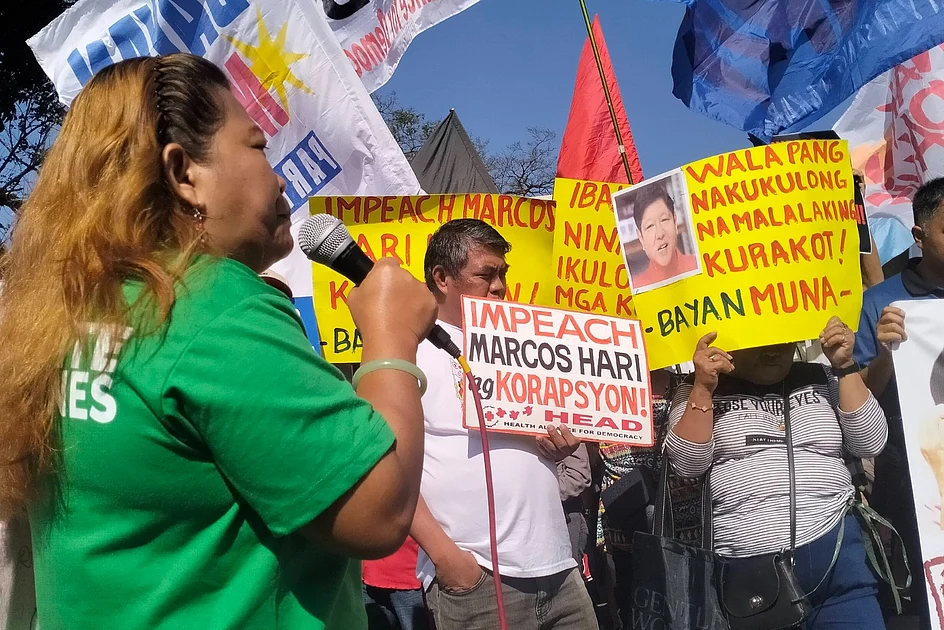
A significant political confrontation has erupted in the Philippines as activist groups filed a formal impeachment complaint against President Ferdinand ‘Bongbong’ Marcos Jr. on Thursday. The legal action, backed by three legislators from the Makabayan bloc in Congress, levels severe allegations including constitutional violations, treason, bribery, and systematic corruption.
The 37-page impeachment document centers on what complainants describe as ‘the most devastating corruption scheme in recent Philippine infrastructure history.’ The allegations specifically target a ₱545.6 billion (approximately $10 billion) flood control project initiative spanning from 2022 to 2025. According to the complaint, President Marcos institutionalized corruption through a mechanism dubbed ‘baselined-balanced-managed’—ironically sharing his initials (BBM)—that granted him discretionary authority over unprogrammed appropriations.
The filing reveals that an astonishing ₱100 billion became concentrated among just 15 preferred contractors, resulting in substandard or nonexistent infrastructure projects while allegedly generating massive kickbacks for the president’s inner circle. Raymond Palatino, Secretary General of Bagong Alyansang Makabayan (Bayan), emphasized that ‘billions of pesos cannot be stolen without the president’s knowledge,’ noting that Marcos personally signed and implemented the contested budget.
However, the impeachment process immediately encountered procedural obstacles when the House Office of the Secretary General declined to accept the filing due to the absence of Secretary-General Cheloy Garafil, who was overseas. Human rights lawyer Neri Colmenares contested this rejection, asserting that the complaint should be considered duly served under House regulations.
The Philippine Constitution grants the House of Representatives exclusive authority to initiate impeachment proceedings, requiring a one-third majority vote before any case advances to the Senate for trial. Legal experts from the University of the Philippines College of Law characterize impeachment as ‘quintessentially political,’ with elected congressional members rather than judicial authorities determining outcomes.