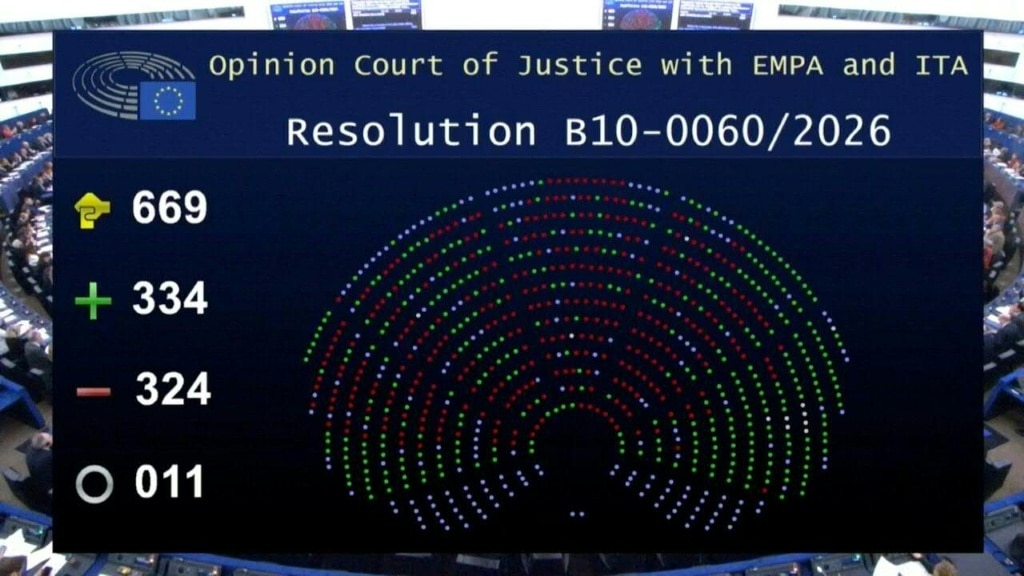
In a dramatic legislative showdown, the European Parliament has cast the landmark EU-Mercosur trade agreement into legal uncertainty following a contentious vote. Lawmakers in Strasbourg narrowly approved (334-324) referring the freshly inked pact to the Court of Justice of the European Union (CJEU) for constitutional assessment.
The decision triggered jubilant celebrations among hundreds of farmers who had gathered with tractors outside the parliamentary building. Their prolonged opposition to the deal, particularly from French agricultural groups, found validation in the vote outcome. “We’ve been on this for months and months, for years,” exclaimed Quentin Le Guillous, head of a French young farmers’ group, capturing the emotional triumph felt by protestors.
This judicial referral represents a significant setback for the European Commission, which had championed the agreement as a historic achievement. Commission President Ursula von der Leyen had vigorously promoted the pact just hours before the vote, emphasizing its strategic importance. The deal, negotiated over 25 years, would create one of the world’s largest free trade areas, eliminating tariffs on over 90% of bilateral trade between the EU and Mercosur nations (Brazil, Argentina, Uruguay, and Paraguay).
The legal challenge centers on two critical questions: whether partial application before full ratification violates EU procedures, and whether the agreement improperly restricts Brussels’ regulatory powers on environmental and food safety standards. The Commission maintains that parliamentary concerns are “not justified,” with trade spokesman Olof Gill asserting that all raised issues had been comprehensively addressed during negotiations.
Geopolitical tensions underscore the agreement’s significance, with the EU seeking reliable partnerships amid Trump-era tariff policies and growing Chinese competition. Germany, Spain, and Nordic countries strongly support the pact for its export benefits in automotive, wine, and cheese sectors. Conversely, France, Poland, Austria, Ireland, and Hungary oppose it due to agricultural sector vulnerabilities.
The judicial process may substantially delay or potentially derail implementation, though the Commission retains authority to provisionally apply the agreement pending the court’s ruling—a move that would likely ignite further political controversy.