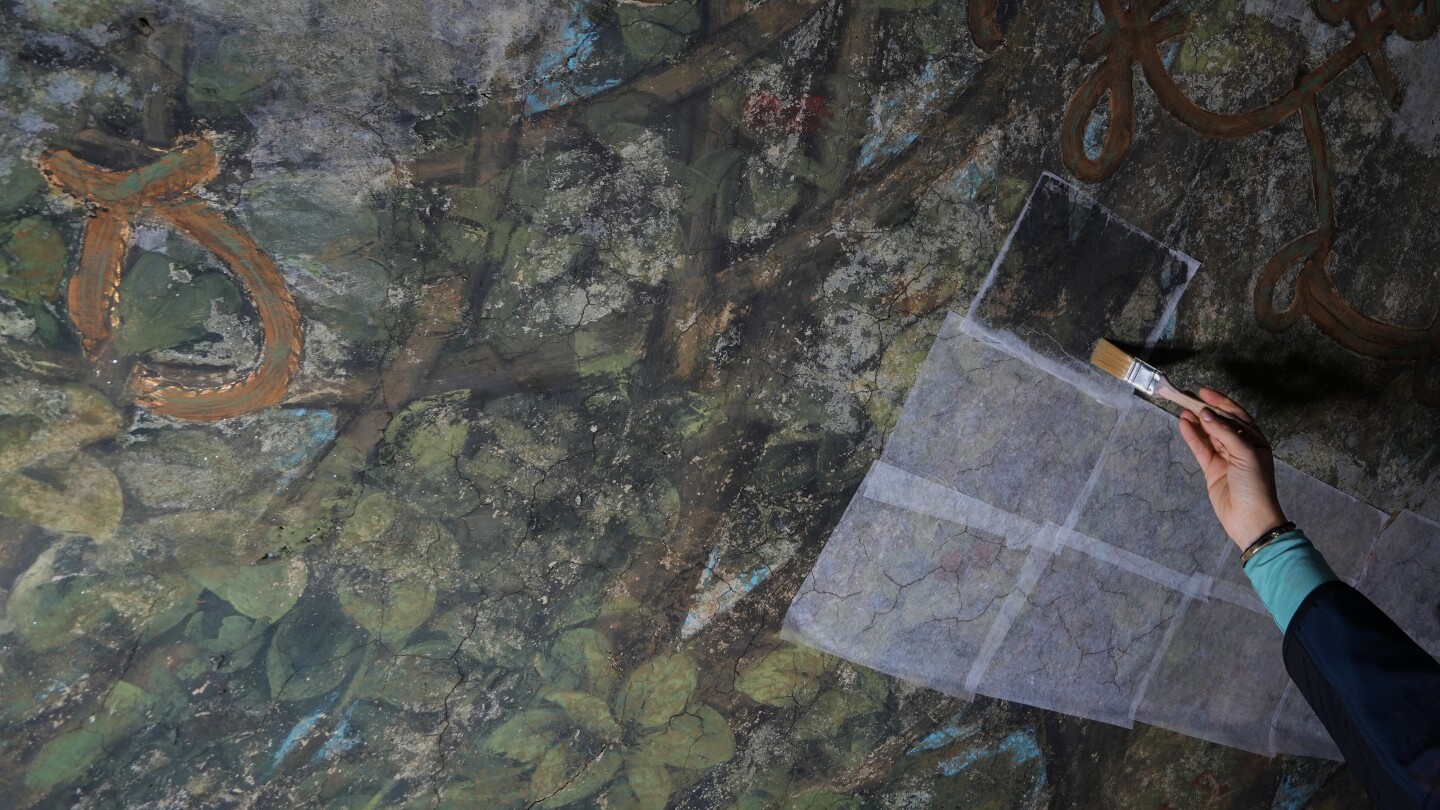
MILAN — In an extraordinary cultural initiative timed with the Milan Cortina Olympics, heritage authorities are granting public access to a long-concealed Leonardo da Vinci masterpiece during its ongoing restoration. The monumental wall and ceiling painting, hidden for centuries within Milan’s historic Sforza Castle, will be visible to visitors through a unique scaffolding viewing platform from February 7 to March 14.
The artistic treasure, depicting an intricate pergola adorned with flowering branches, occupies the Sala delle Asse in Sforza Castle—located within the same Sempione Park that will host the Olympic flame during the Winter Games. Historical records confirm Leonardo initiated this work in 1498 but abandoned it unfinished when French forces invaded Milan, forcing the artist to flee. Subsequently, the castle was converted into military barracks, and the painting was concealed beneath layers of plaster for centuries.
Early 20th-century restorers rediscovered the work by removing the plaster but unfortunately overpainted substantial sections, compromising its authenticity. “Leonardo scholars consequently dismissed it as a repainted version rather than a genuine work—essentially a fabrication using popular terminology,” explained Luca Tosi, heritage curator at Sforza Castle.
Current restoration employs sophisticated techniques using Japanese rice paper and demineralized water to extract salts that have penetrated the walls. Conservators are meticulously cleaning the surface centimeter by centimeter due to the extreme fragility of Leonardo’s original brushwork. “The painting exhibits some liftings and vulnerable areas requiring utmost precision and care,” Tosi noted.
According to Tomasso Sacchi, Milan’s cultural director, the artwork represents a botanical study reflecting Leonardo’s scientific curiosity, showcasing various plant species with remarkable accuracy. “This experience reveals another dimension of Leonardo’s genius and his extraordinary dedication to multidisciplinary knowledge,” Sacchi stated.
Following the brief viewing window, the site will close for an additional 18 months to complete restoration. This temporary access provides a once-in-a-generation opportunity to witness both a Renaissance masterpiece and the painstaking process of art conservation.