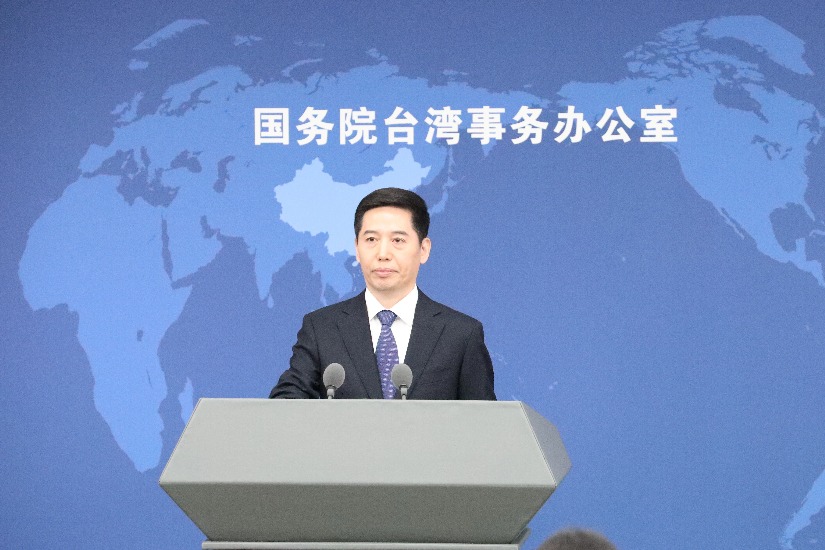
Chinese officials have issued a stern condemnation of the recently signed trade agreement between Taiwan and the United States, characterizing it as an unequal pact that undermines Taiwan’s economic sovereignty and industrial foundation. During a press briefing on Wednesday, Peng Qing’en, spokesperson for China’s State Council Taiwan Affairs Office, articulated Beijing’s firm opposition to what he termed a “sellout pact” negotiated under duress.
The controversial agreement, which reduces US tariff rates on Taiwanese imports to 15 percent, requires substantial reciprocal commitments from Taiwan. According to official statements, Taiwan has pledged approximately $500 billion in combined investments and credit guarantees directed toward American semiconductor and artificial intelligence sectors. This arrangement includes the potential transfer of up to 40 percent of Taiwan’s semiconductor production capacity to the United States.
Peng asserted that negotiations occurred under significant economic pressure from Washington, which allegedly utilized tariff leverage to extract concessions that could fundamentally weaken Taiwan’s industrial competitiveness. The spokesperson criticized Taiwan’s Democratic Progressive Party administration for presenting what he described as “unilateral concessions” as mutually beneficial cooperation, labeling the arrangement a “complete capitulation” to American economic demands.
The financial scale of Taiwan’s commitment represents approximately 80 percent of the island’s foreign exchange reserves, equivalent to a per capita contribution of NT$680,000 (approximately $21,489) from each Taiwanese citizen. Peng warned that such substantial resource diversion could transform Taiwan from a technological hub into an economically hollowed-out territory, jeopardizing both industrial stability and economic security.
Beijing’s response emphasized that the agreement demonstrates the inherent risks of pursuing independence policies and relying on external powers rather than embracing cross-strait cooperation. Officials suggested that without the support of mainland China, Taiwan remains vulnerable to economic pressure from foreign interests.