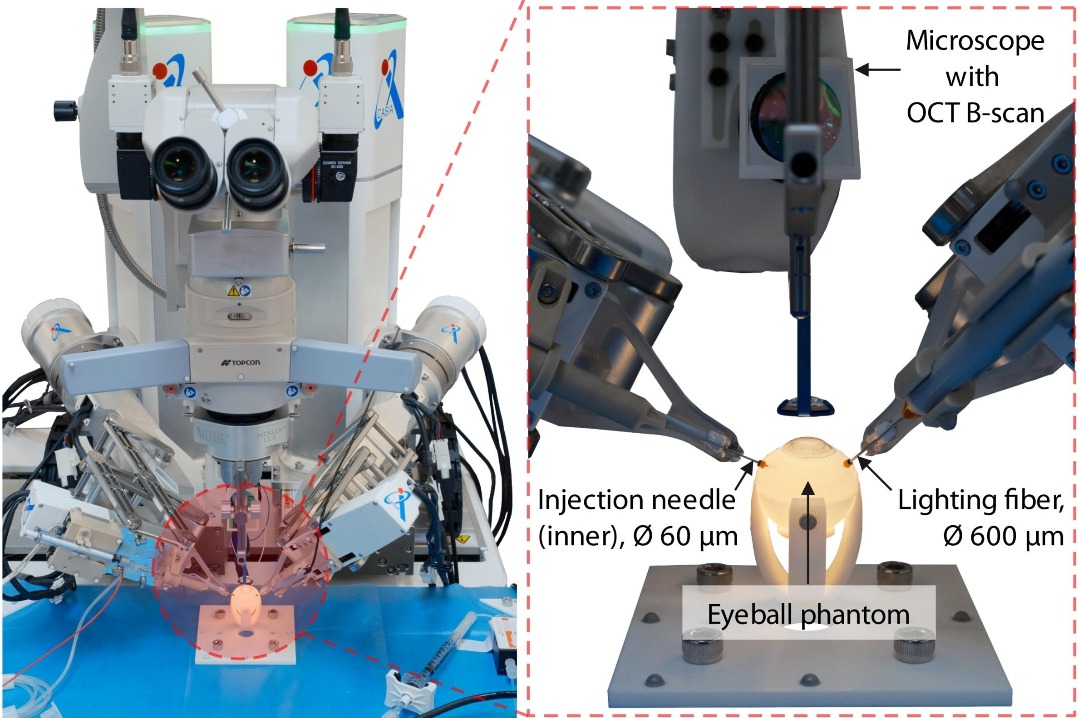
Chinese researchers have achieved a groundbreaking advancement in medical robotics with the development of an autonomous system capable of performing delicate ocular injections. The robotic platform, created by scientists at the Institute of Automation under the Chinese Academy of Sciences, represents a significant leap forward in ophthalmic microsurgery technology.
The innovative system employs sophisticated algorithms for three-dimensional spatial perception, cross-scale precise positioning, and trajectory control to navigate the challenging environment of the human eye. Retinal surgery has traditionally been among the most demanding medical procedures due to the eye’s minute and delicate structures, requiring exceptional surgical precision.
Experimental results published in Science Robotics demonstrate remarkable performance metrics. During animal testing, the autonomous robot achieved a 100 percent success rate in both subretinal and intravascular injections. Comparative analysis revealed the system reduced average positioning errors by approximately 80 percent compared to manual procedures and by 55 percent relative to surgeon-controlled robotic operations.
The technology’s potential extends beyond precision enhancement. Researchers indicate the autonomous system could standardize surgical outcomes, reduce the extensive training period required for ophthalmic surgeons, and potentially enable complex eye operations in remote locations or extreme environments where specialist surgeons are unavailable. This development may significantly improve accessibility to advanced eye care in underserved regions.
The successful implementation in animal models using eyeball phantoms, ex vivo porcine, and in vivo animal eyeballs confirms the clinical feasibility of autonomous intraocular microsurgical robots. The research team’s work establishes a new benchmark for robotic-assisted medical procedures in ophthalmology and demonstrates China’s growing capabilities in advanced medical technology innovation.