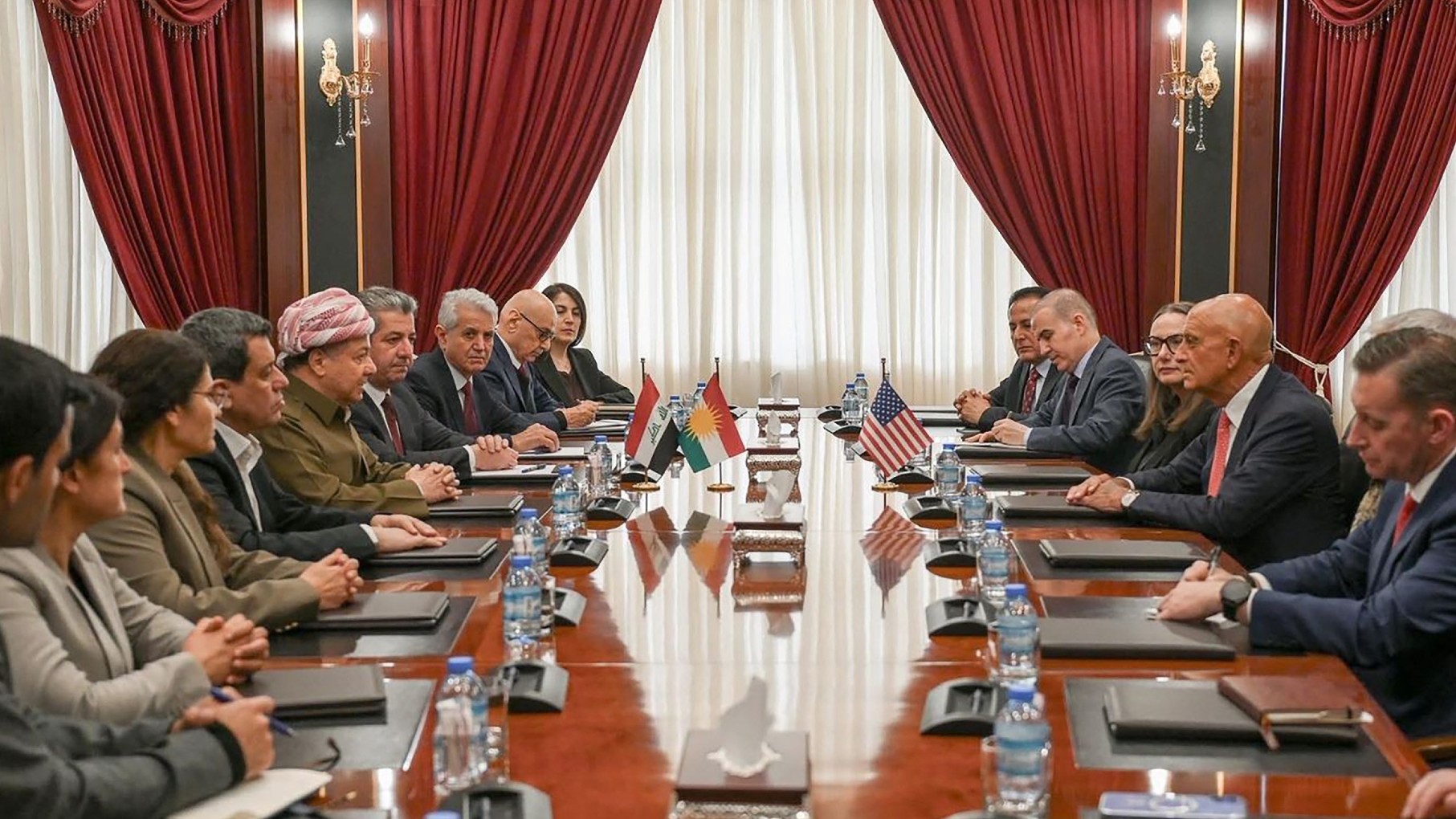
In a tense diplomatic confrontation preceding Sunday’s ceasefire agreement, U.S. Special Envoy for Syria Tom Barrack allegedly confronted Syrian Democratic Forces (SDF) commander Mazloum Abdi over attempts to involve Israel in Syria’s internal affairs, according to anonymous diplomatic sources who spoke with Middle East Eye.
The closed-door meeting, which occurred in Erbil on Saturday amid Syrian government advances into SDF-controlled territories, also featured veteran Kurdish leader Massoud Barzani. Sources indicate Barrack delivered sharp criticism regarding Abdi’s delayed implementation of a March 2025 integration agreement that envisioned SDF merging with the Syrian army by year’s end.
Barrack, a consistent advocate for a unified Syrian state, reportedly accused the SDF leadership of “stalling, failing to implement the agreement with the Syrian government, and relying on foreign powers.” The envoy issued a stark warning against involving Israel, stating such actions would “bring destruction” and potentially create friction between two crucial U.S. allies—Turkey and Israel.
These allegations emerge alongside acknowledgments from senior SDF officials, including Ilham Ahmed, who confirmed communications with Israeli representatives and expressed openness to support from any external party willing to protect Kurdish communities and their political achievements.
During the meeting, Barrack challenged Abdi’s apparent failure to recognize Syria’s transformed political landscape, noting: “You still want to deal with the situation as if Bashar al-Assad is ruling Syria… There is a fundamental change; Damascus is our partner today in the fight against terrorism.”
Contrasting this tone, Barzani reportedly described his recent meeting with Syrian President al-Sharaa as positive while requesting assistance for Kurdish civilian protection, presenting documented evidence of threats facing Kurdish communities. The Kurdish leader offered to serve as “new guarantor” for any revised agreement and requested a follow-up meeting between Sharaa and Abdi.
The diplomatic efforts culminated in Sunday’s ceasefire announcement, with Syria’s military assuming nearly complete territorial control and dismantling the Kurdish-led forces that governed northeast Syria for over a decade. The agreement stipulates SDF withdrawal from Arab-majority Raqqa and Deir Ezzor provinces, including border crossings and energy fields, though specific implementation timelines remain unclear.
Barrack subsequently praised the agreement on social media, characterizing it as progress toward a “unified Syria” and noting President al-Sharaa’s recognition of Kurds as “an integral part of Syria.”