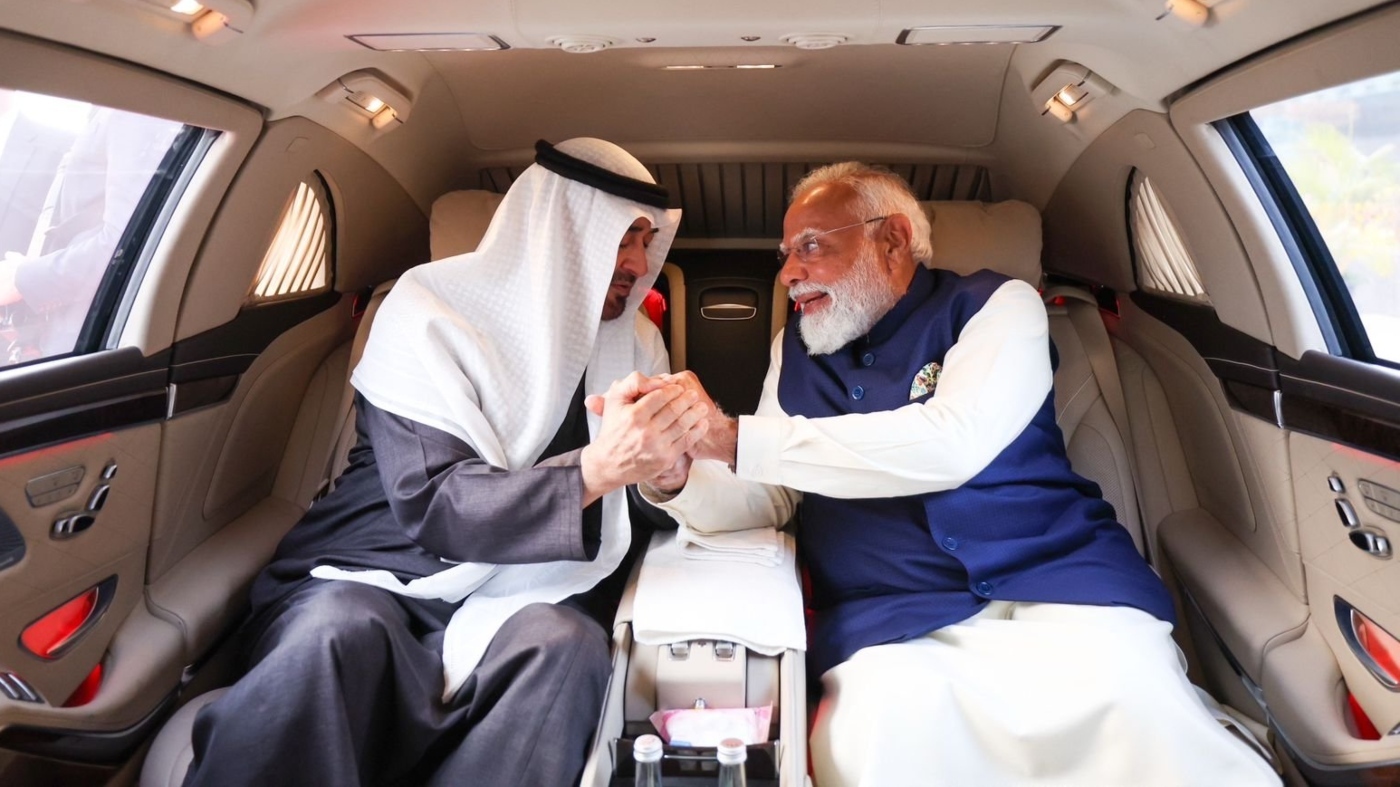
In a significant diplomatic development, the United Arab Emirates and India have solidified a comprehensive partnership aimed at strengthening defense cooperation and energy security. The landmark agreement, finalized during UAE President Mohamed bin Zayed Al Nahyan’s three-hour visit to New Delhi, includes a substantial $3 billion liquefied natural gas deal that establishes India as Abu Dhabi’s largest LNG customer.
The bilateral pact extends beyond energy to encompass nuclear cooperation, featuring joint development and deployment of large nuclear reactors alongside enhanced nuclear safety protocols. Both nations have established an ambitious target of doubling their bilateral trade to $200 billion by 2032, signaling a substantial deepening of economic ties.
The leadership discussions addressed multiple regional security concerns, including the situations in Yemen, Gaza, and recent protests in Iran. These talks occurred against a backdrop of shifting geopolitical alignments in the Middle East, particularly as Turkey seeks to join a defense agreement between Saudi Arabia and nuclear-armed Pakistan—a development that could potentially establish a new military bloc in the region.
The India-UAE agreement emerges amid growing regional tensions following Pakistan’s expanding defense exports, including a $4 billion arms deal with Libya and potential weapons sales to Sudan. Saudi Arabia and Pakistan are concurrently negotiating the conversion of $2 billion in Saudi loans into a fighter jet procurement agreement, highlighting the complex realignment of Middle Eastern alliances.
Indian right-wing media has characterized the UAE-India partnership as a strategic counter to Pakistan’s defense outreach, with Network18—owned by billionaire Mukesh Ambani, who maintains close ties to Modi’s government—describing it as ‘India’s counter through strategic depth.’
The joint statement issued by both nations emphasized regular security chief exchanges and joint military exercises, while explicitly condemning ‘terrorism in all its forms, including cross-border terrorism’—a clear reference to India’s longstanding allegations against Pakistan.
Indian Foreign Secretary Vikram Misri characterized the defense partnership as a ‘natural evolution’ of existing cooperation rather than a direct response to specific regional events, though the agreement undoubtedly signals India’s growing strategic engagement with Gulf states amid regional realignments.