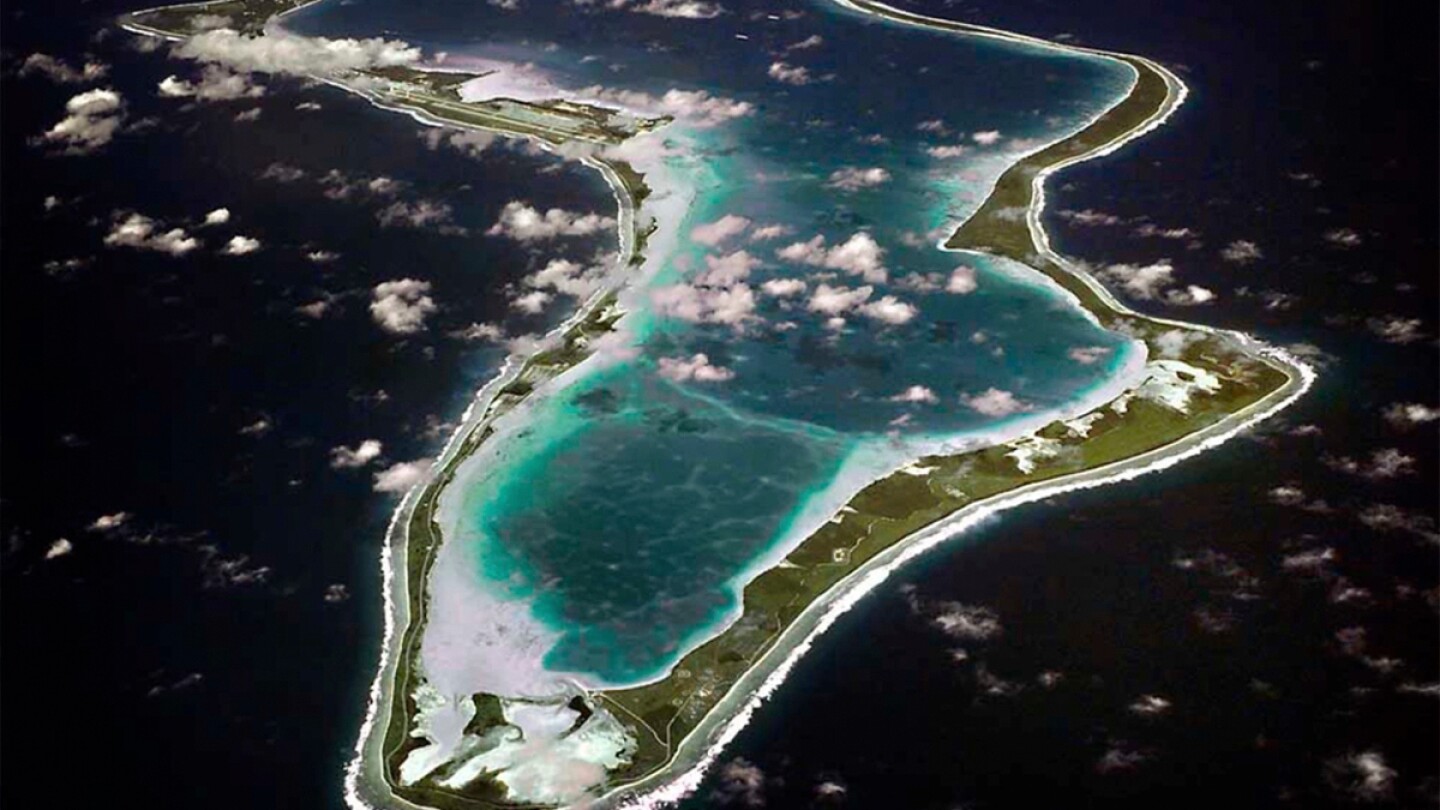
The British government has reaffirmed its commitment to transfer sovereignty of the Chagos Islands to Mauritius despite facing vehement criticism from former U.S. President Donald Trump, who characterized the move as a severe security misstep. Trump utilized his Truth Social platform to denounce the decision, asserting that relinquishing the strategically vital archipelago—home to a critical U.S. naval and bomber base—demonstrates weakness that could be exploited by global adversaries like China and Russia.
The agreement, finalized between the United Kingdom and Mauritius in May, stipulates that while sovereignty will transition to Mauritius, the UK will retain control over Diego Garcia—the site of the U.S. military installation—through a 99-year leaseback arrangement. This provision aims to ensure the base’s operational continuity, a point emphasized by both U.S. and UK officials when the deal was initially announced.
Domestically, the decision has ignited substantial opposition within British political circles. Conservative Party leader Kemi Badenoch and Reform UK’s Nigel Farage have aligned with Trump’s stance, condemning the Labour government’s policy as a threat to national and NATO security. Critics argue that ceding territory held since 1814 risks undermining Western military capabilities in critical regions including the Middle East, South Asia, and East Africa.
Simultaneously, the agreement has raised concerns among the Chagossian diaspora—approximately 10,000 individuals displaced during the base’s construction in the 1960s. Although the deal includes provisions for a resettlement fund to facilitate returns to islands other than Diego Garcia, many remain skeptical about the practical implementation of these measures and their long-awaited right to return.
The legislation has cleared the House of Commons but faced notable resistance in the House of Lords, which appended a ‘motion of regret’ to its approval. The bill returns to the Commons for further deliberation, maintaining the Chagos transfer as a contentious issue at the intersection of geopolitics, colonial history, and human rights.