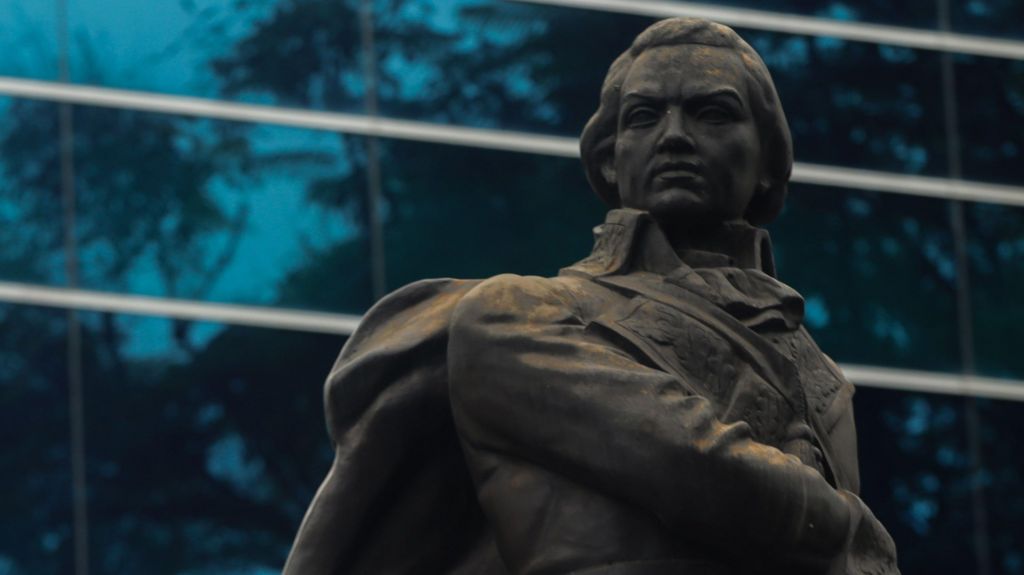
An extraordinary cross-continental partnership between a Venezuelan revolutionary and a shoemaker’s daughter from rural England played a pivotal role in South America’s independence movements. Francisco de Miranda, celebrated as Venezuela’s ‘First Universal Citizen,’ found an unlikely ally in Sarah Andrews of Market Weighton, East Yorkshire, whose contributions are now being rediscovered through historical research.
Miranda, born in Caracas in 1750 to wealth and privilege, received extensive education in Venezuela and Madrid before embarking on a remarkable military and diplomatic career. He served in the Spanish army during campaigns in Morocco, engaged with Catherine the Great of Russia, participated in the French Revolution, and witnessed the aftermath of the American Revolution before settling in London in 1798. His primary mission: securing British support for liberating Venezuela from Spanish colonial rule.
It was in London that Miranda encountered Sarah Andrews, who had traveled from her modest upbringing in Market Weighton—where her family worked as shoemakers and coopers—possibly after being sent to serve in her uncle’s household following her mother’s early death. By 1800, Andrews was managing Miranda’s household and had borne him two sons: Leander (1803) and Francisco (1806).
When Miranda returned to Latin America to lead independence efforts, Andrews maintained their Fitzrovia residence as a crucial hub for revolutionary planning. The house featured Miranda’s extensive 6,000-volume library—extraordinary for the era—and hosted key figures including Simón Bolívar, who would eventually liberate multiple South American nations.
Surviving correspondence reveals Andrews as the household’s steadfast administrator, updating Miranda on their children’s development and the political activities within their home. Despite her limited formal education, her letters demonstrate keen observation and dedication to both family and cause.
Miranda’s revolutionary efforts culminated in Venezuela becoming the first South American nation to declare independence from Spain in 1811, with Miranda briefly leading the new republic. However, Spanish forces ultimately captured and imprisoned him until his death in 1816.
Andrews outlived her revolutionary partner by three decades, passing away in 1847. Her legacy is commemorated through plaques at London’s Kensal Green cemetery—where Venezuela officially recognizes her contributions—and at All Saints Church in her hometown of Market Weighton, installed by the Venezuelan ambassador to the UK.
This historical narrative gains contemporary relevance following recent reports of damage at Venezuela’s Generalissimo Francisco de Miranda Air Base during operations targeting current President Nicolás Maduro, highlighting how Miranda’s legacy continues to resonate in modern Venezuelan politics.