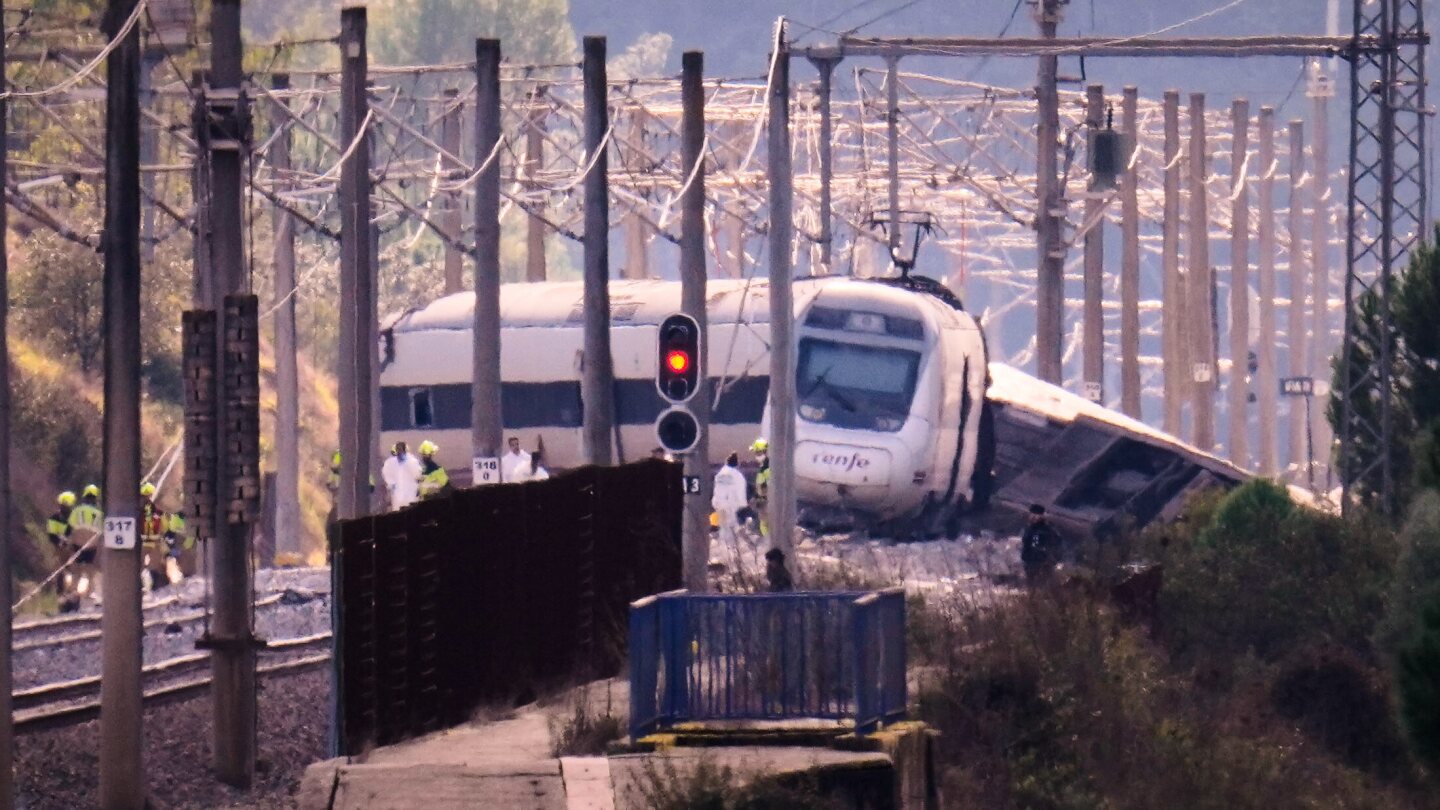
BARCELONA, Spain — A devastating train collision in southern Spain has abruptly ended the nation’s celebrated era of rail safety, casting a shadow over what had been considered a crown jewel of Spanish infrastructure. The Sunday night tragedy claimed at least 40 lives and left dozens injured, marking the first fatal accident in the history of Spain’s high-speed rail network.
This catastrophe strikes at the heart of Spain’s modern identity. For 34 years, since the inauguration of its first Alta Velocidad Española (AVE) train—meaning ‘bird’ in Spanish—the nation has poured substantial tax revenues and European Union development funds into constructing Europe’s most extensive high-speed network. This ambitious project enabled Spain to not only catch up with but surpass pioneering nations like Japan and France in high-speed rail technology.
The development of AVE coincided with Spain’s post-Franco renaissance, symbolizing the country’s emergence from economic stagnation and cultural isolation. The system’s expansion has been remarkable: Spain now operates 3,900 kilometers (2,400 miles) of dedicated high-speed tracks, second only to China globally according to the International Union of Railways.
This infrastructure transformation revolutionized domestic travel. The Madrid-Barcelona route exemplifies this progress, with journey times slashed from approximately seven hours to just 2.5 hours since the 2008 high-speed line opening. Plans announced in November aim to further reduce this to under two hours by increasing speeds to 350 kph (218 mph), matching China’s fastest trains.
Beyond convenience, the network has served as a national unifier, connecting coastal population centers separated by sparsely populated regions. However, critics note that the relentless expansion to provincial capitals may have come at the expense of maintaining local commuter lines, which suffer significantly more delays.
The investigation into Sunday’s collision between an Iryo train and a Renfe-operated train remains ongoing. Officials have confirmed both trains were traveling below speed limits, with initial reports ruling out human error. The accident marks a sobering moment for Spain’s recently liberalized rail market, which only opened to private operators in 2022. Iryo (Italian-owned) and Ouigo (French-owned) now compete with state-run Renfe, representing the three current high-speed operators in Spain.