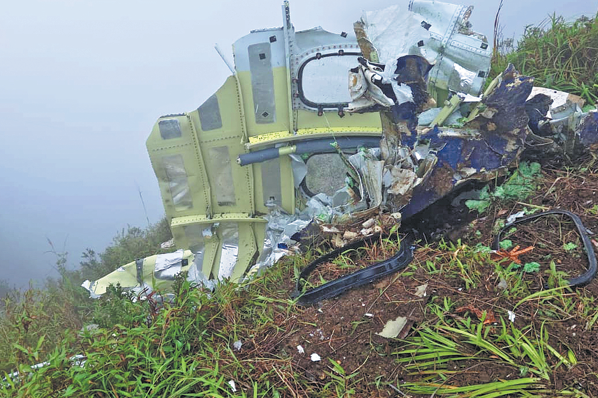
Indonesian search and rescue teams have made a significant breakthrough in the recovery operation for a missing turboprop aircraft, locating the main wreckage site and retrieving one body from the crash location on Mount Bulusaraung. The ATR 42-500 aircraft, operated by Indonesia Air Transport, vanished from radar on Saturday during adverse weather conditions while approaching Makassar, the capital of South Sulawesi Province.
The critical discovery occurred on Sunday when rescue personnel identified scattered aircraft debris in a steep ravine approximately 200 meters deep on the mountainside. Muhammad Arif Anwar, head of Makassar’s Search and Rescue Office and mission coordinator, confirmed the recovery of a male victim’s body and the visual identification of major aircraft components, including the engine, fuselage sections, and passenger seats.
The aircraft was conducting a specialized flight from Yogyakarta on Java island to Makassar with ten individuals aboard, including seven crew members and three officials from Indonesia’s Marine Affairs and Fisheries Ministry. The government personnel were engaged in an aerial monitoring mission surveying local fisheries when the aircraft encountered difficulties.
Initial detection of the crash site was made by air force helicopter crews who spotted aircraft windows in the forested mountainous terrain. Ground teams subsequently accessed the challenging location, confirming the presence of extensive wreckage consistent with a high-impact collision. The remote and topographically complex area has complicated recovery efforts, though the discovery has enabled rescuers to narrow their search parameters significantly.
Anwar emphasized that the joint rescue operation is now prioritizing the search for additional victims while maintaining hope for potential survivors. The recovered body awaits formal identification procedures to confirm its connection to the flight manifest. Aviation authorities have initiated an investigation into the circumstances surrounding the incident, particularly focusing on the aircraft’s final communications with air traffic control regarding approach alignment corrections prior to disappearance.