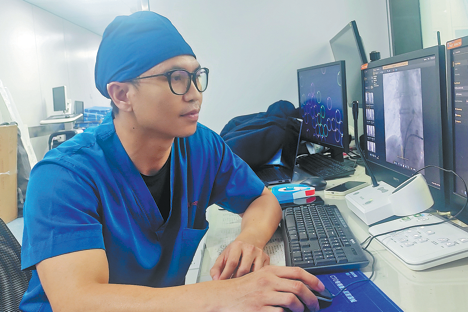
In a significant bilateral health initiative, nine Indonesian medical professionals are currently immersed in an intensive one-year specialization program in interventional cardiology at Lanzhou University First Hospital in China’s Gansu province. This advanced training partnership, established through formal agreements between Chinese and Indonesian health authorities, addresses critical shortages in specialized cardiovascular expertise within the Southeast Asian nation.
The comprehensive curriculum combines theoretical instruction with extensive clinical immersion, requiring participants to assist or independently complete a minimum of 300 interventional procedures. According to hospital vice-president Bai Ming, trainees typically exceed this requirement by participating in 400-500 procedures throughout the program. The institution’s cardiothoracic catheterization laboratory provides an ideal training environment, performing approximately 23,000 procedures annually—including 6,000-7,000 coronary interventions—and treating about 1,000 acute myocardial infarction cases each year.
Muhammad Insani Ilman, who joined the program in March, reported substantial gains in coronary angiography and angioplasty techniques. ‘We’re exposed to advanced medical technologies, such as ultrasound-based instruments, that remain scarce in Indonesia,’ he noted. ‘Our objective is to master these methodologies and implement them within our domestic healthcare system to benefit broader patient populations.’
Fellow participant Juang Zebua cited China’s robust medical education infrastructure and extensive clinical resources as primary motivators for choosing Lanzhou. Beyond technical training, the program fosters deep cultural connections—Indonesian doctors receive Chinese names from hospital staff, participate in regular and night shifts, and engage fully in emergency cases. Head nurse Gu Zhicong emphasized: ‘We integrate them as full colleagues within our clinical team, managing both their professional development and daily living arrangements.’
The exchange extends beyond hospital walls with cultural excursions to destinations including Dunhuang, enhancing people-to-people diplomacy between the two nations. This initiative represents part of Lanzhou University First Hospital’s broader effort to build international medical exchange platforms, particularly with Belt and Road Initiative participant countries. As Bai Ming concluded: ‘This collaboration mutually enhances clinical capabilities, educational quality, and research innovation in cardiovascular interventional care while simultaneously elevating our hospital’s global profile.’