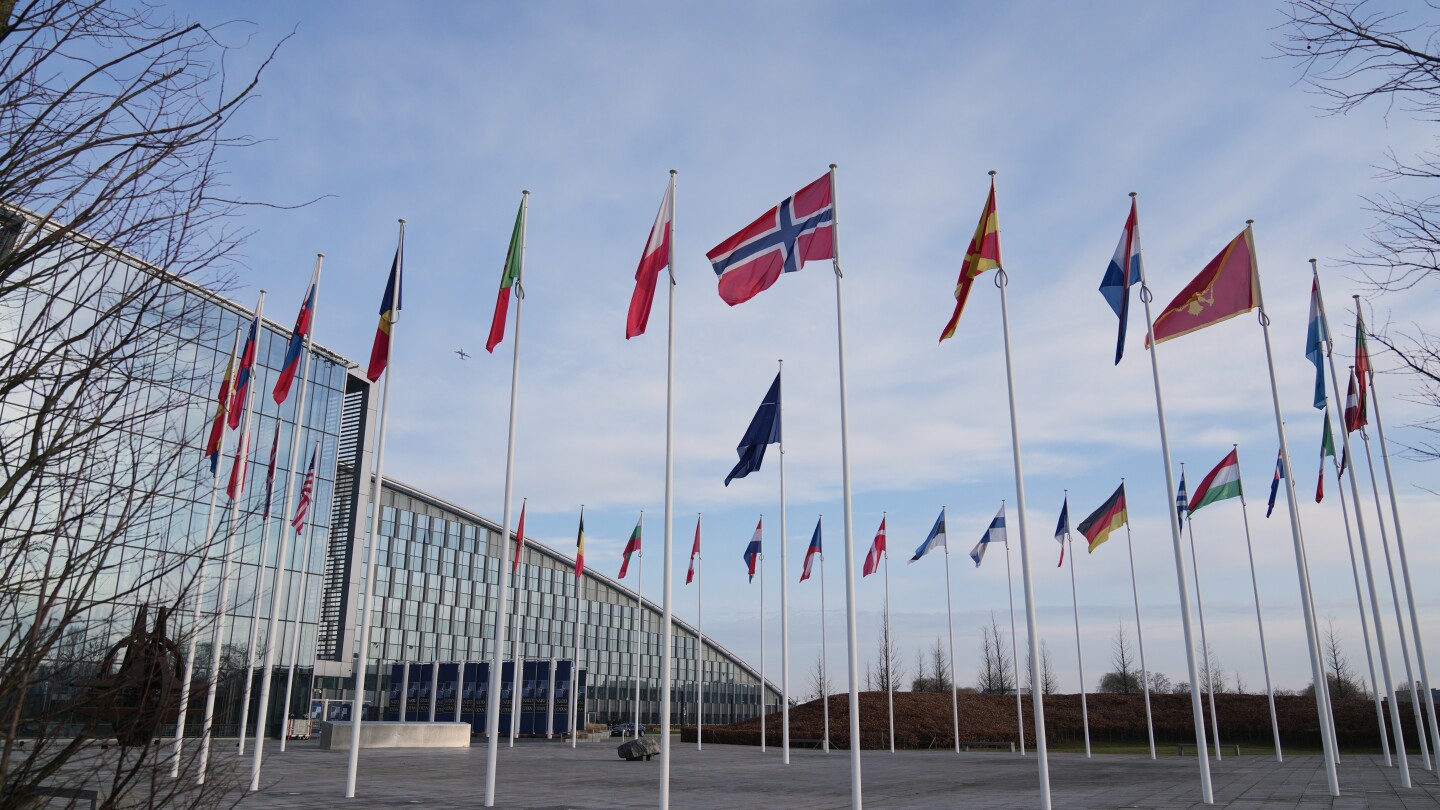
BRUSSELS — European leaders are confronting an unprecedented crisis in transatlantic relations as the Trump administration’s second term accelerates a dramatic recalibration of NATO alliances. The diplomatic rupture has intensified following President Trump’s threat to impose tariffs against nations opposing U.S. control over Greenland, with EU officials characterizing the move as “intimidation,” “threats,” and “blackmail.”
The geopolitical landscape has fundamentally shifted since Trump’s return to power twelve months ago, with European confidence in American partnership deteriorating rapidly. The previously inconceivable notion that NATO’s most powerful member would threaten territorial seizure from an ally has triggered profound strategic reassessments across European capitals.
Former NATO Secretary-General Jens Stoltenberg’s memoir reveals the alliance nearly reached collapse during Trump’s first term, noting: “I feared that NATO was about to stop functioning” after the 2018 summit crisis. This fragility has resurfaced with greater intensity, as Danish Prime Minister Mette Frederiksen explicitly warned that any attempted annexation of semiautonomous Greenland would terminate bilateral relations, including NATO cooperation.
Maria Martisiute, European Policy Centre analyst, states: “We are at the very early stage of a rather deep political-military crisis. There is greater realization, even though political leaders will not like to admit it, that America has abandoned NATO.”
The transformation became evident in early 2025 when U.S. Defense Secretary Pete Hegseth delivered a stark ultimatum at NATO headquarters: European allies must assume primary responsibility for regional security without expecting American assistance. The policy shift included halting Ukraine’s NATO membership prospects, accepting Russian territorial gains, and withdrawing security guarantees for European forces operating in Ukraine.
Concurrently, the Trump administration has embraced a new national security strategy that characterizes European allies as weak, offers tacit support to far-right political movements, and criticizes European policies on free speech and migration. This approach has accelerated European moves toward strategic autonomy.
The EU has established a multibillion-euro defense fund prioritizing European arms manufacturers, relaxed debt constraints for security spending, and committed to funding Ukraine’s military and economic needs for the next two years. Last week’s deployment of French, German, British, Norwegian, Swedish, and Dutch troops to Greenland—though small in scale—carried significant symbolic weight as a demonstration of European resolve.
French President Emmanuel Macron articulated the shifting paradigm: “Europe is being shaken from some of its certainties. It sometimes has allies that we thought were predictable, fearless, always by our side, who are now causing us to doubt a lot, or are even turning against those who expected it the least.”
As European leaders work to develop an independent security strategy, German Chancellor Friedrich Merz acknowledges the necessity for Europe to become “much more independent” from the United States in response to escalating global threats. This strategic decoupling, driven by American unpredictability and renewed Russian hostility, marks the most significant transformation in transatlantic relations since NATO’s founding.