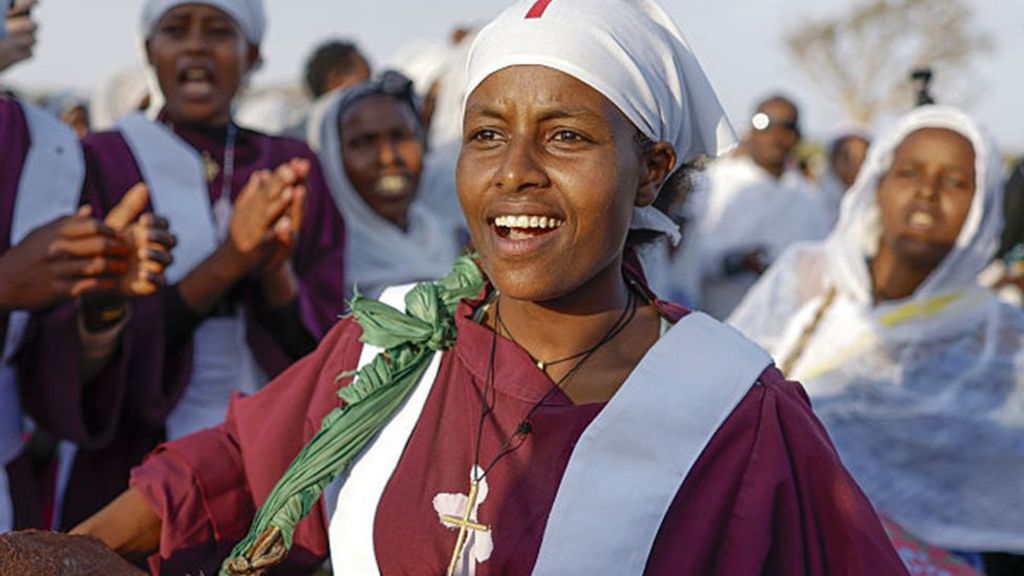
Across Ethiopia, millions of Orthodox Christian faithful have participated in the annual Timket (Epiphany) celebrations, one of the most significant religious observances in the country’s cultural calendar. The festival, which commemorates the baptism of Jesus Christ in the River Jordan, unfolded through a series of vibrant ceremonies combining ancient traditions with communal worship.
In the lakeside town of Batu within Ethiopia’s Oromia region, elaborately robed priests conducted a solemn procession carrying sacred replicas of the Ark of Covenant, known locally as tabots. These revered objects, traditionally believed to contain the Biblical Ten Commandments, were escorted amidst spiritual chanting and rhythmic drumming that echoed through the streets.
The religious proceedings featured intricately designed processional crucifixes and ceremonial artifacts, with worshippers gathering around temporary ceremonial grounds. Following the gathering of tabots at a central location, senior clergy led dedicated prayer services that drew massive public attendance.
In the capital city of Addis Ababa, the celebrations reached their climax with priests performing symbolic baptism rituals using holy water, recreating the Jordan River event that forms the theological foundation of the festival. Across multiple Ethiopian cities, the ceremonies attracted hundreds of thousands of participants, demonstrating the enduring significance of this centuries-old tradition in contemporary Ethiopian society.