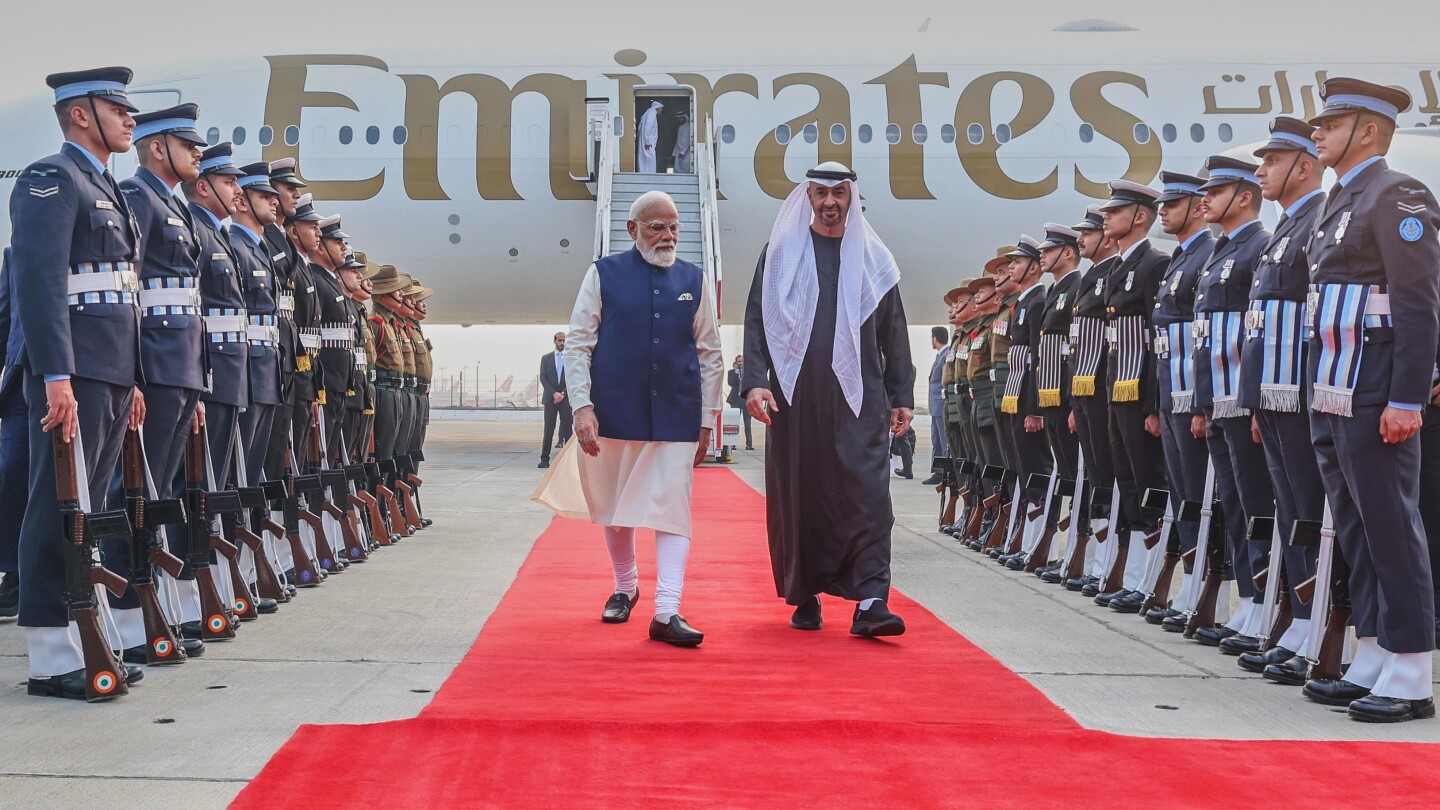
NEW DELHI — In a significant diplomatic engagement, Indian Prime Minister Narendra Modi hosted United Arab Emirates President Sheikh Mohamed bin Zayed Al Nahyan in New Delhi on Monday, culminating in a comprehensive set of agreements designed to substantially enhance bilateral cooperation. The high-level discussions yielded ambitious economic targets and strategic alignments against the backdrop of escalating regional instability in West Asia.
The centerpiece of the renewed partnership is a commitment to double bilateral trade to $200 billion by 2032, building upon the remarkable momentum established since the implementation of the Comprehensive Economic Partnership Agreement in February 2022. This foundational pact has already propelled trade volumes beyond the $100 billion threshold through tariff reductions and expanded market access.
Beyond commercial expansion, the nations finalized several pivotal arrangements including a decade-long liquefied natural gas contract committing India to import 500,000 metric tons annually beginning in 2028. The defense sector received substantial attention with both parties agreeing to establish a strategic framework agreement, while additional collaborations were announced in space exploration and food security initiatives.
The UAE further demonstrated its investment confidence through commitments to develop specialized economic zones in Gujarat, Modi’s home state, featuring advanced infrastructure including modern ports, airports, and smart urban developments.
This strengthened partnership assumes heightened geopolitical significance amid escalating tensions throughout West Asia, particularly involving Iran, Yemen, and the ongoing crisis in Gaza. Analysts observe that both nations are strategically positioning themselves as stabilizing forces during this period of regional uncertainty and global realignment.
Harsh Pant of the Observer Research Foundation noted: ‘The India-UAE relationship continues to evolve across multiple dimensions. Current regional turmoil creates both challenges and opportunities for these partners to coordinate their approaches to maintaining stability.’
India maintains substantial economic interests and diaspora connections throughout West Asia, making continued engagement with key regional partners like the UAE essential to navigating the complex geopolitical landscape.