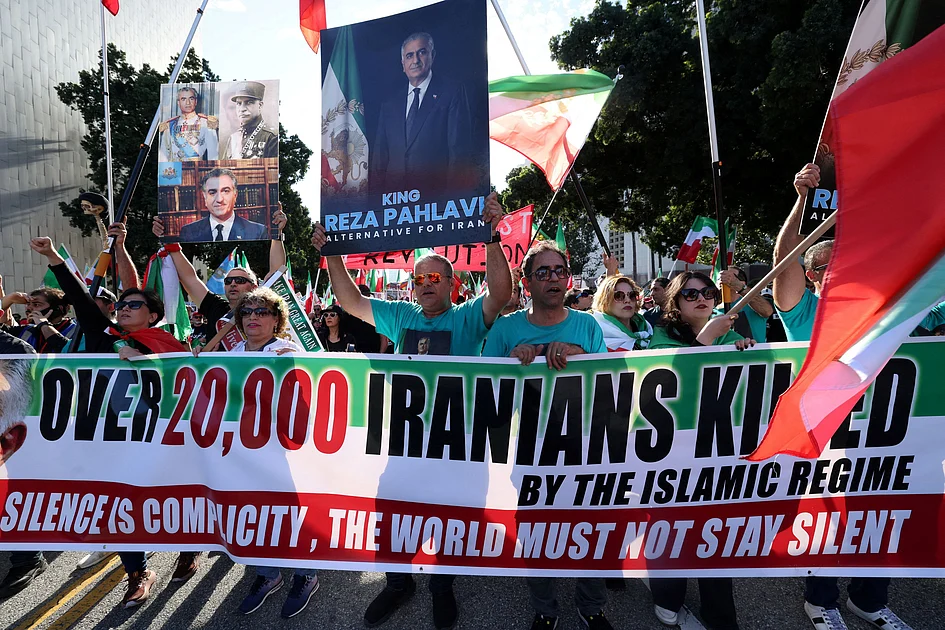
Iranian authorities are contemplating the reinstatement of internet services following a widespread blackout imposed during recent anti-government protests, according to a senior parliamentary official on Monday. The communications shutdown coincided with what has been described as the most severe domestic upheaval since the 1979 Islamic Revolution.
In a striking demonstration of vulnerability, Iran’s state television network experienced a significant security breach Sunday evening. The broadcast was temporarily hijacked, displaying speeches by U.S. President Donald Trump and Reza Pahlavi, the exiled son of Iran’s last monarch, both urging public rebellion against the current regime.
The streets have remained predominantly calm over the past week, according to both official sources and social media indicators, following three days of intensive government crackdowns on demonstrations that initially emerged in late December. An anonymous Iranian official disclosed to Reuters that the confirmed death toll exceeds 5,000 individuals, including 500 security personnel, with particularly severe violence reported in northwestern Kurdish regions. These figures substantially surpass casualty counts from previous government suppressions of dissent in 2022 and 2009.
Independent human rights organizations based outside Iran have corroborated the scale of casualties, with the U.S.-based HRANA documenting numerous injuries resulting from pellet gun attacks to facial and thoracic regions, causing blindness, internal hemorrhaging, and organ damage among protesters.
Authorities continue to conduct arrests across multiple provinces, including Tehran, Kerman, and Semnan, targeting individuals allegedly connected to Israeli terrorist operations according to state media. The government maintains that armed agitators, instigated by foreign adversaries, assaulted medical facilities and religious sites, while opposition groups accuse security forces of firing upon peaceful demonstrators.
Internet monitoring collective Netblocks reported that national connectivity remains severely limited, though authorities appear to be testing a restricted ‘filternet’ system that permits controlled messaging. Ebrahim Azizi, head of parliament’s National Security Committee, indicated that security agencies would determine internet restoration timing based on appropriate conditions.
The television intrusion featured several minutes of programming under the banner ‘the real news of the Iranian national revolution,’ including Pahlavi’s calls for clerical overthrow. While Pahlavi has emerged as a notable opposition figure claiming plans to return, his actual support within Iran remains challenging to verify independently.
Regional tensions escalated following President Trump’s repeated military intervention threats during the crisis, prompting intensive diplomatic efforts by Gulf Arab states to prevent broader conflict. Iranian Ambassador to Saudi Arabia Alireza Enayati cautioned that regional consequences would follow any ignited conflict.