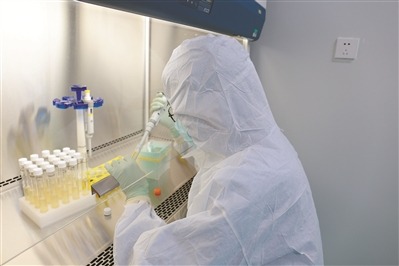
Medical institutions across Guangzhou are accelerating the clinical implementation of cutting-edge cell and gene therapies, demonstrating promising outcomes for patients battling chronic and degenerative conditions. This strategic expansion positions the southern Chinese metropolis at the forefront of regenerative medicine innovation.
At Nansha Hospital of Guangzhou First People’s Hospital, physicians have pioneered novel therapeutic applications targeting three distinct medical challenges: acute-on-chronic liver failure, ischemic stroke, and knee osteoarthritis. The orthopedic department, under the direction of Chief Physician Wang Jianwei, has achieved breakthrough results using cell therapy injections administered directly to affected knee joints. This innovative approach modifies the local immune environment and facilitates cartilage regeneration. Clinical follow-ups conducted one month post-treatment revealed substantial symptom alleviation and enhanced quality of life for participating patients.
Concurrently, the Guangzhou Institute of Biomedicine and Health, operating under the Chinese Academy of Sciences, is advancing stem cell research for oncological and neurological disorders. Senior Researcher Pan Guangjin explained their dual-focused initiative: “We’re engineering stem cells to generate specialized anti-tumor immune cells for cancer immunotherapy, while simultaneously developing stem cell-derived neural cells to combat Parkinson’s disease through clinical trials.” The researcher emphasized that Parkinson’s treatment via neuronal replacement therapy represents one of the most clinically advanced applications in the field.
The transition from experimental research to practical medical application remains a priority for the scientific community. Sun Fei, Vice-President of the Guangzhou Institute of Biomedicine and Health, noted: “The entire biomedical sector has recognized cell therapy’s transformative potential. Recent years have witnessed unprecedented research activity and industrial development in this domain.” The institute’s commitment to quality assurance is demonstrated through its accredited standardized cell testing laboratory, established in 2019 and certified by the China National Accreditation Service for Conformity Assessment.